

Spain is located on Europe’s Iberian Peninsula, and is known for its food, football (soccer), Mediterranean beaches, architecture, Flamenco music and dance, siesta, bullfights, and wine. Spain is made up of 17 autonomous regions and each diverse in its history and culture.
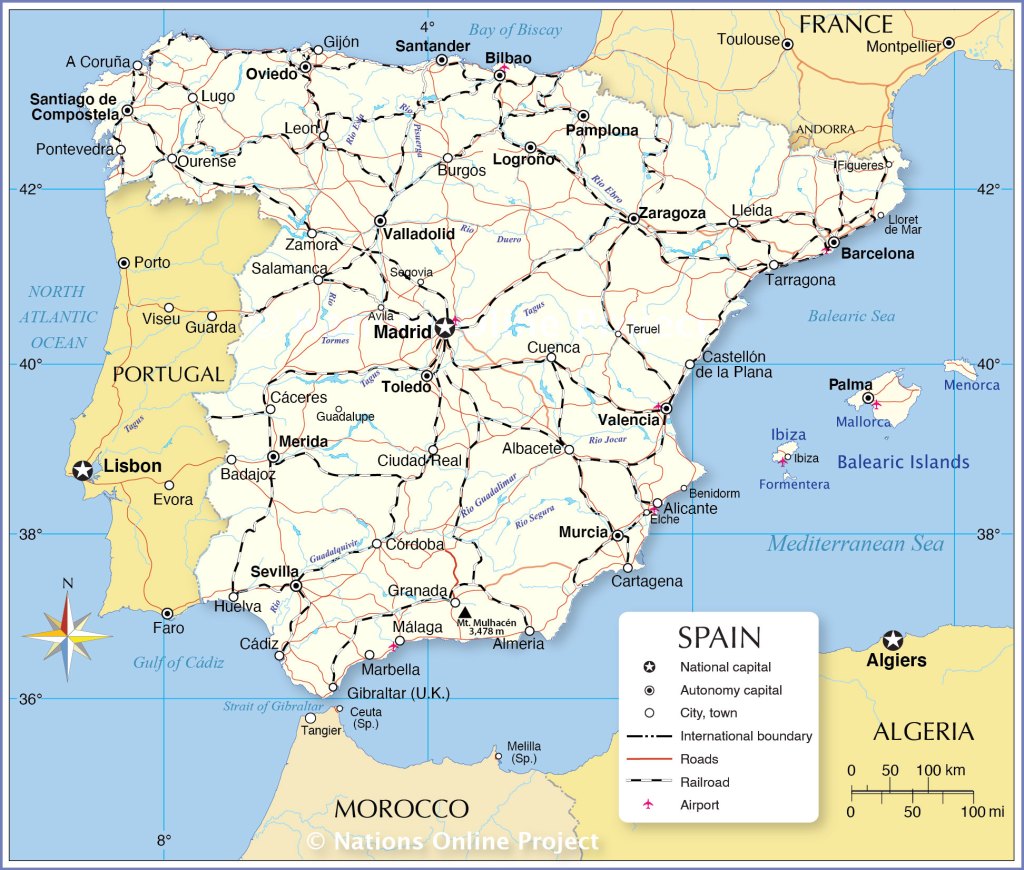
Cosmopolitan cities are wide spread throughout Spain. Cities Iike Madrid and Barcelona are world-renowned for their arts, culture, cuisine and shopping. Other areas are just as impressive with rich cultural experiences, like flamenco dancing, architecture and deep rooted Moorish heritage, like Seville for example.
With so many options, it’s impossible to choose just one so we tried to see as much of Spain as possible during our visit. We will have just over three weeks planned and will travel to 8 different cities during that time. Here is our itinerary for a 23 night visit to Spain
23 Night Spain Itinerary
Click the city below for an overview and highlights from our visit:
Seasons in Spain
Seasons in Spain are similar to the US but Spain receives over 3,000 hours of sunshine each year. Winter months can be mild, but some areas can get very hot during the summer months so you want to be aware of that if planning a visit. For example, we were in Seville at the end of June and the highs that week were to hit 110 degrees Fahrenheit! Now keep in mind that in the evenings it would drop into the 70’s. I guess it explains why locals use the hottest part of the day for siesta. It was surprising that when we left Seville and drove just a few hours south to Málaga, the temperature was about 20 degrees cooler.
Spain Seasons:
- Spring – from March to June
- Summer from June to September
- Autumn – from September to December
- Winter – from December to March
Bet you didn’t know!
Olive oil is one of the world’s healthiest oils, as well as one of the tastiest! And while you might be tempted to believe that most of the world’s olive oil comes from Greece or Italy, the vast majority actually comes from Spain. Spain provides more than is 40% of the world’s olives. And if you are ever driving through the Andalusian countryside in Spain you will see miles and miles of olive groves for as far as the eye can see!
Tips and Tidbits for Spain
Local Currency = Euro (and during our visit the exchange rate was $1.09 to 1.00 EUR)
Language = Spanish (Spanish is the official language in Spain with Castilian Spanish the predominant dialect. However, certain Autonomous Communities have their own official language in addition to Spanish such as Aranese, Basque, Catalan, and Galician.)
 The Modern Nomads