

Fiji
Where Happiness Comes Naturally
“Bula” is the Fijian greeting for hello, or welcome. While Bula (pronounced “buu-laa”) has many meanings, the literal translation is “life”. When Fijians use it as a greeting, they are wishing you good health and you will hear this over and over again when you are in Fiji.
From the moment you land you can visually see how beautiful Fiji is. But the longer you are there you truly see Fiji’s beauty, both inside and out. The people are friendly, the waters are crystal clear and we found Fiji to be much more than just a resort getaway.
Islands, Islands, and more Islands!
As you fly over Fiji, venture out by boat, or even glance out from whatever location or island you are on, you are guaranteed to see another island or islet. Over 300 islands make up the country of Fiji, with two thirds of those uninhabited. What I also find interesting is that there are also over 500 islets! I wasn’t sure what that was so I looked it up (so you don’t have to); An islet is a VERY small, unnamed island. All the islands and islets of Fiji are spread out over one million square miles (almost three million square kilometers)! Sounds like a lot right, well to give you some perspective of the land mass we are talking about, if you combine the total land mass of all the islands in Fiji, you could fit them all inside the state of New Jersey. But while the islands that make up Fiji are small in size, they are bountiful in beauty!
We spent two weeks in Fiji and stayed at two separate resorts on two separate islands. The map below gives you a general idea of the layout of the main islands and where we visited. You will find the links at the bottom of this page for travel blogs about each of those but before you jump to the bottom of the page, I encourage you to take some time to read a little about what makes Fiji Fiji as you scroll down!
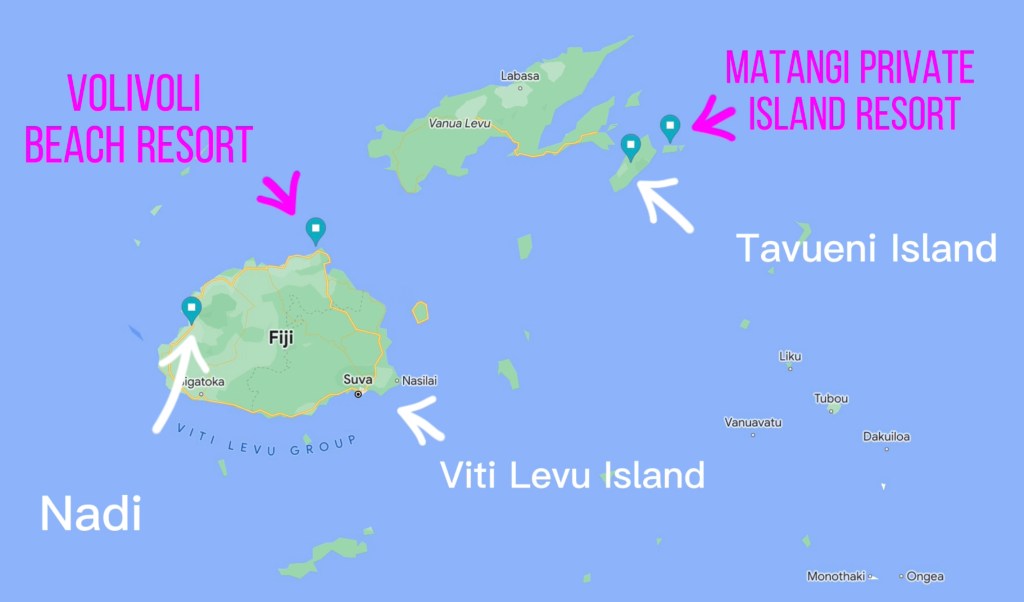
Viti Levu is the largest of the Fijian islands and is where the capital city of Suva is located as well as Nadi, the country’s main transportation hub. Fiji has a total population of just under one million (stats as of 2022) with most people living in the urban areas of the two largest islands, Viti Levu and Vanua Levu. The other island I will mention is Taveuni as it is the 3rd largest island in Fiji and is where we landed when making our way to Matangi Private Island.
Life on these little islands
Most visitors enjoy the tropical resort atmosphere of Fiji but behind the scenes is where you will find a local community hard at work, bringing life to these islands! Islands big and small, they are are thriving with culture and the Fijian spirit. Islands without structured towns will typically have a primary village with structured schools and churches. Some smaller islands can have as few as a handful of people residing on it while other may have one or more villages, some of which could have 100 or more in each village.
Just a Bit of Fiji History
Fiji was a Crown colony with the British Empire from 1874 until 1970 at which point Fiji established their own parliamentary democracy and gained independence from British rule. While still a developing country Fiji is considered one of the more developed of the Pacific Island economies. A large part of the economy is devoted to the agriculture sector with sugar exports and tourism industry as the main sources of foreign exchange.
Language in Fiji
English, Fijian, and Fijian Hindi are all official languages of Fiji. While most people in Fiji speak at least two languages, English and the language of their ethnic community, there are many islands populated only by villagers who primarily speak their local dialect.
Did you know?
Interesting Fact: Fiji straddles the 180th Meridian which is recognized as the International Dateline. It marks the end of one calendar day and the beginning of the next. This date line crosses very few bits of land with three of those bits on part of Fiji. One of those spots is in Taveuni. This is a great tourist spot where you can stand and have a photo-op!
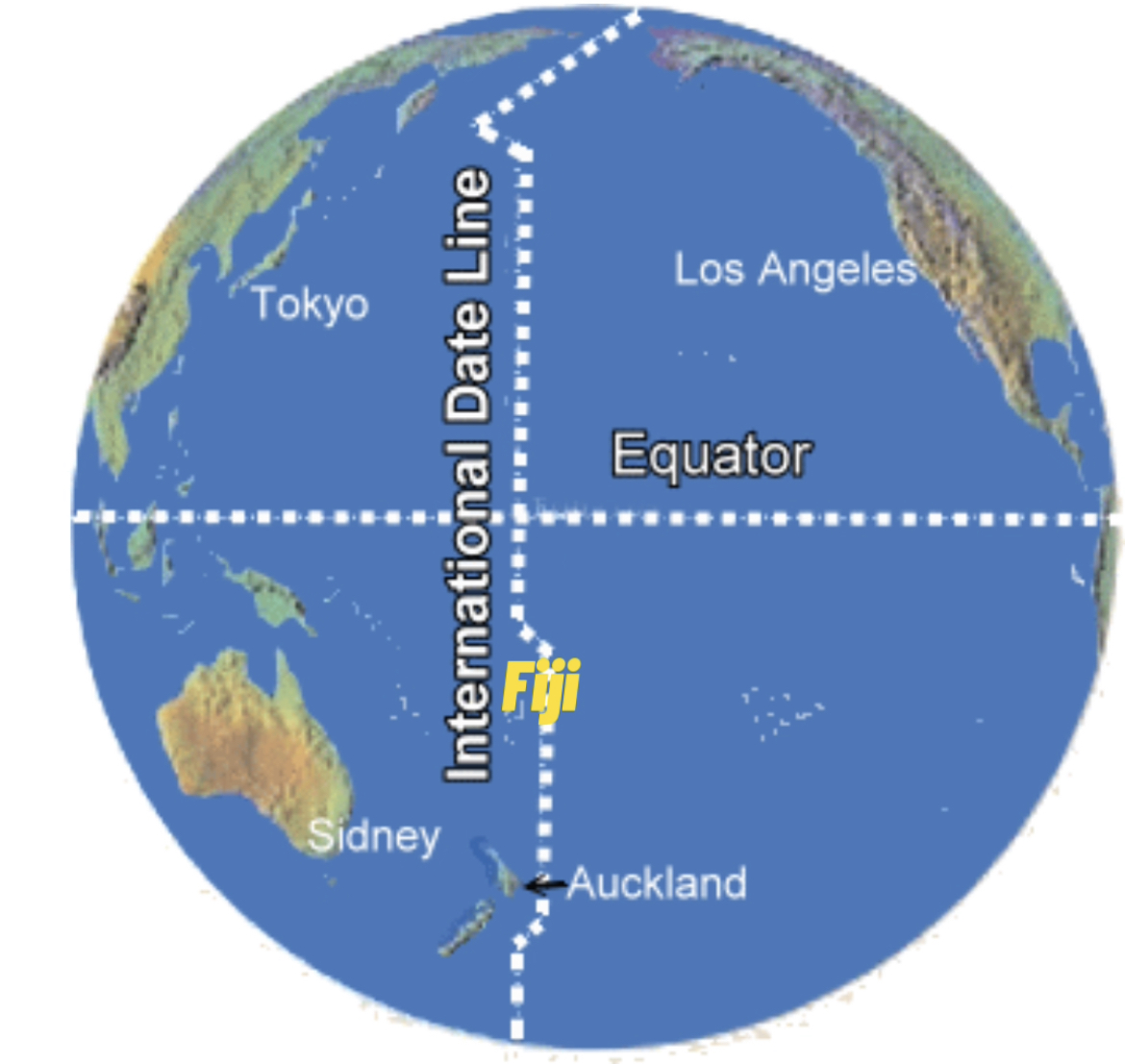
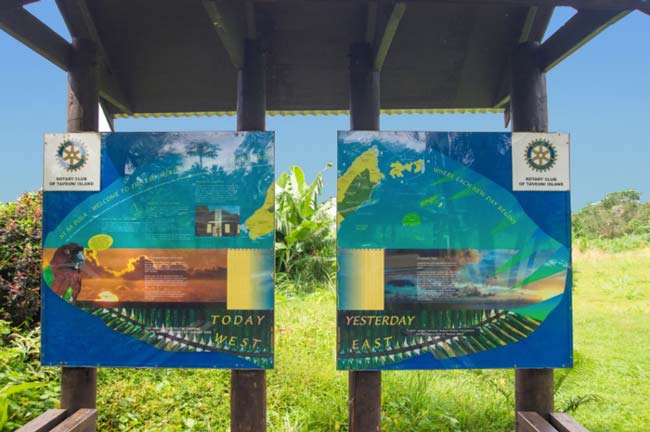
While this imaginary line runs through Fiji, just like time zone lines, this imaginary line actually zig zags and has no legal international status so countries are free to choose the dates they observe. So while the line crosses through parts of Fiji, the country recognizes the same time zone.
Weather in Fiji
Fiji is a tropical destination that can be visited year round. While this paradise has year-round sunshine, there are two distinct seasons. Some would say those are “Warm” and then “Warmer” but the notable seasons would be the “Dry” and “Wet” seasons.
Fiji’s Dry Season – Winter (Warm)
- May thru October
- Temperatures: 66-84 (F) / 19-29 (C)
Fiji’s Wet Season – Summer (Warmer)
- November thru April
- Temperatures: 72-91 (F) / 22-33 (C)
The peak season for traveling or holidaying in regards to Fiji weather is late March through early December. We traveled there at the tail end of the Wet Season and it was perfect! But if you ask me when a “good” time to visit Fiji is, I would say anytime!

Click the links below to read about our experience on two different islands during our stay in Fiji:
 The Modern Nomads