
Hey there, fellow ocean explorers! We are about to dive headfirst into the stunning paradise of scuba diving in the Maldives. Picture this: crystal-clear waters, vibrant coral reefs teeming with life, and an underwater playground that should be on any divers bucket list! This wasn’t Pete’s first visit to the Maldives so he knew first hand how special this place is. For me, I was a newbie and couldn’t wait to get geared up!
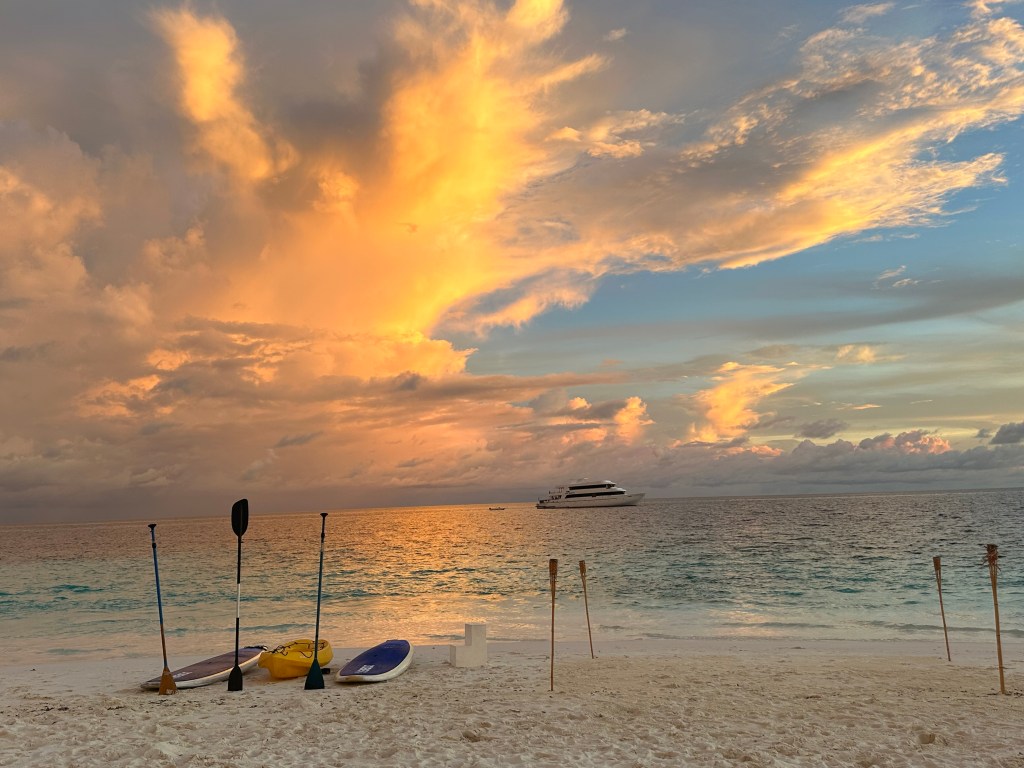
The Maldives is a long and narrow country formed by 20 plus natural atolls. a An atoll is a ring shaped reef, island, or chain of islands that has been formed of coral. In the Maldives, the collection of paradise islands that are wrapped in beautiful coral reefs offer a diving experience that is like no other. So, whether you’re a newbie strapping on your first fins or a seasoned pro seeking a new thrill, the Maldivian atolls offer something for everyone.
Why choose the Maldives?
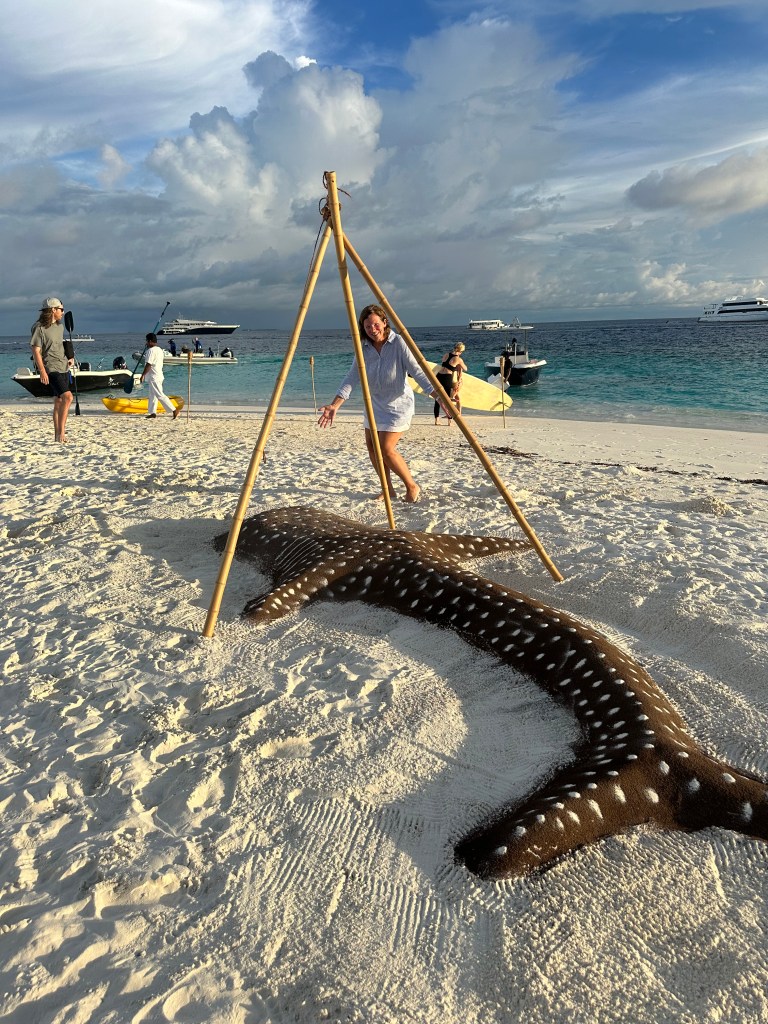
The Maldives is an underwater wonderland that boasts a kaleidoscope of marine life, from graceful manta rays gliding through the water to majestic whale sharks occasionally known to cruise by (for the record, we didn’t see one on our trip). It is also said that there is a chance to see the elusive hammerhead sharks here (but just like the whale shark, they were a little too elusive on this trip) But what we did see was plenty!
When and Where to dive
The Maldives is an all-year-round destination but depending on the type trip you are looking for you there are two considerations you want to take into account. The SEASON and LOCATION.
The Maldives has two distinct SEASONS– and those months that are in between and simply considered monsoon transitional periods.
- The southwest monsoon (wet-season) normally extends from mid-May to November. This period is when manta rays visit the cleaning stations on the eastern sides of the atolls, while the western sides provide the right conditions for channel dives.
- The northeast monsoon (dry-season) extends from January to March. During these months, conditions are good for channel dives on the eastern side of the atolls, while the atolls’ western sides are ideal for viewing manta rays drawn to their cleaning stations.
You can actually find great diving year round in the Maldives but depending on the time of year, you will have different options regarding LOCATION. There are 3 general geographical locations to dive in the Maldives.
- The central atolls: This option is one of the most popular and is one of the best picks for divers and non-divers alike. One of the main reasons is that central atolls itineraries are available all year round and cover most of the reasons people fall in love in the Maldives. Divers of all experience levels are welcome and no minimum number of dives is required. The encountered marine life varies from nudibranchs and eels, through schools of reef fish, eagle rays, reef sharks and turtles to manta rays and whale sharks. Type of dives include channel dives, drift dives, pinnacles and walls, and even wreck dives!
- Far North: This area is available primarily between July and October. The Northern atolls are famous for their unique topography, schooling reef fish and coral life. If manta rays are your passion then the Northern atolls is where will see plenty of these giants.
- Deep South: The Southern atolls are the best option for thrill-seekers! Now keep in mind this area will require more experienced divers as most dive sites are exposed to very strong currents. This would typically be for those divers holding advanced certificates with a minimum of 100 logged dives. This area is going to mainly be available for dive trips beginning late January through April. But this is where the fun begins because the deep south channels are famous for hammerheads, bull sharks, and silky sharks!
What is the best way to dive the Maldives:
Regardless of where you end up, diving in the Maldives presents a multitude of options for those seeking an adventure getaway. From resort-based diving to exploring unique atolls and channels, your choices cater or depend on your specific preferences and experiences. But if you ask us, the crown jewel of diving experiences in the Maldives is undoubtedly the liveaboard option.
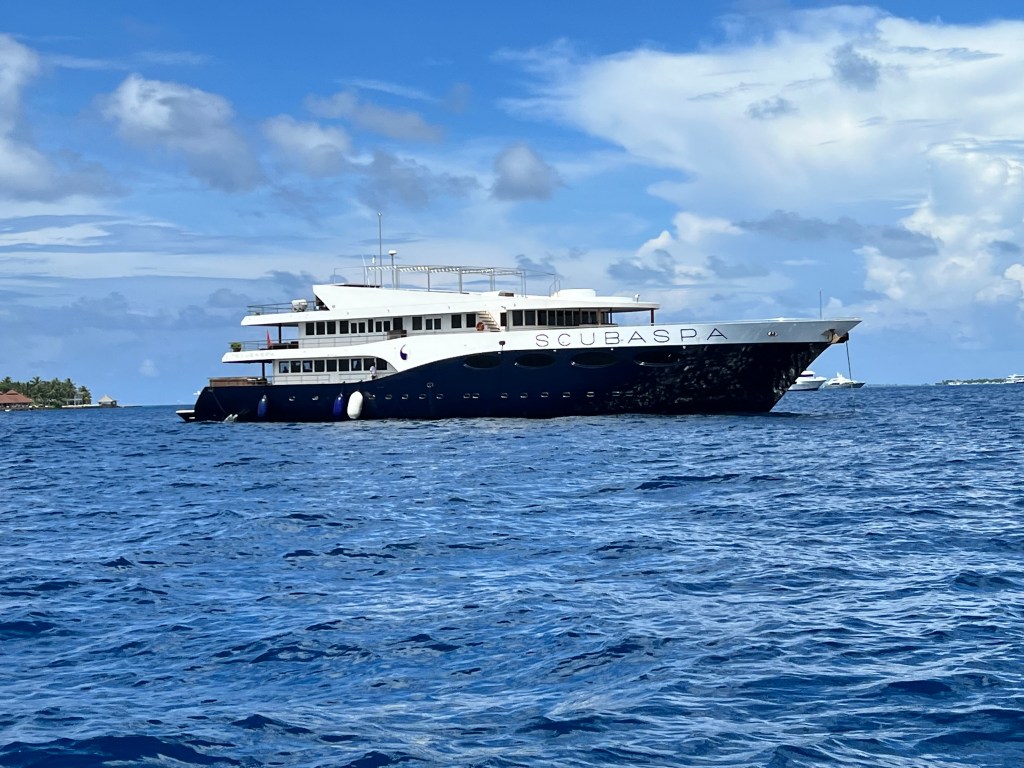
The Scubaspa Experience
Liveaboards are basically floating diver resorts and stand out for their access to pristine dive sites that are typically away from the crowds, thus offering a more an unbeatable diving experience. As I mentioned earlier, this is Pete’s second time to dive the Maldives and he had such a great experience the last time we decided to use the same company for this trip, Scubaspa.

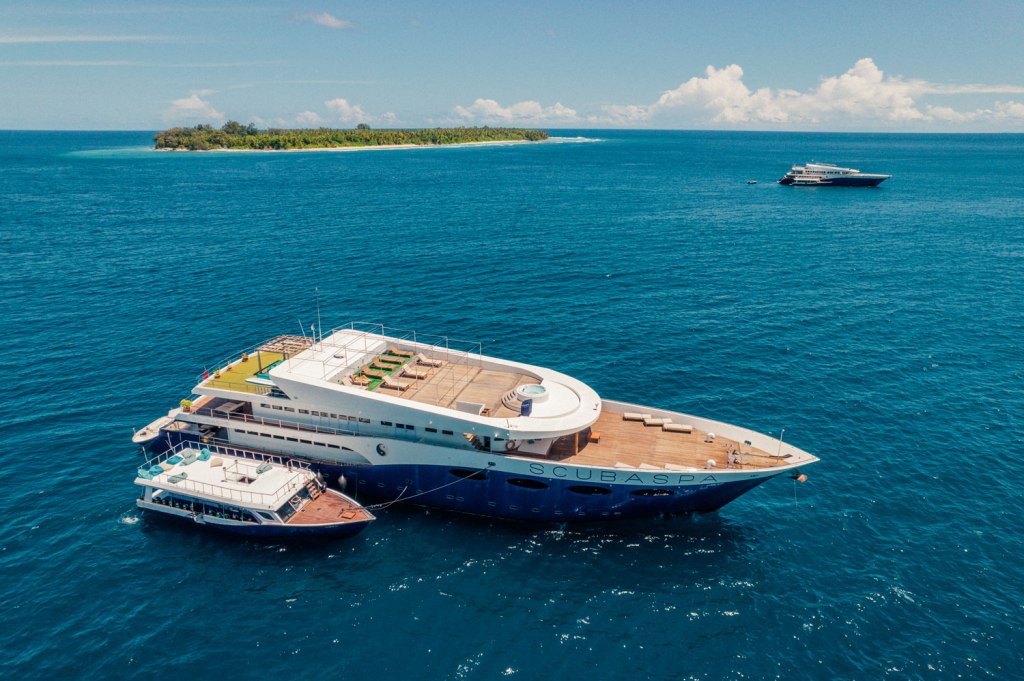
The Scubaspa liveaboard fleet in the Maldives offers a luxurious and unique diving experience that combines world-class scuba diving with the comforts of a premium spa retreat. While these boats are designed with divers in mind, this boat offers so much more and are really popular with those who travel with non-diving partners. There were four spacious decks to spread out and relax, a fully staffed SPA on board (yes, you read that right), a small fitness room, jacuzzi, a bar & restaurant and a dynamic staff that is always smiling ready to assist with anything you need.
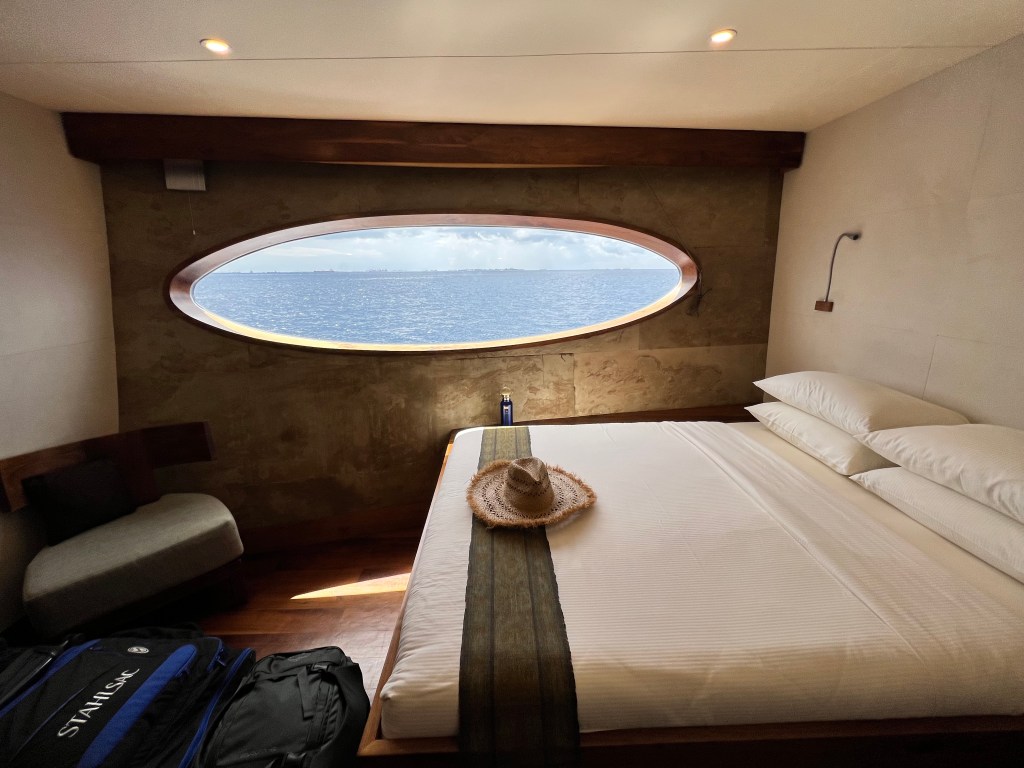
And let’s not forget to mention the chefs aboard Scubaspa – they did not disappoint! Not only was the top-notch dining on deck, we also a beach barbecue, and a gourmet diner catered under the stars, every dining moment was a delightful experience.

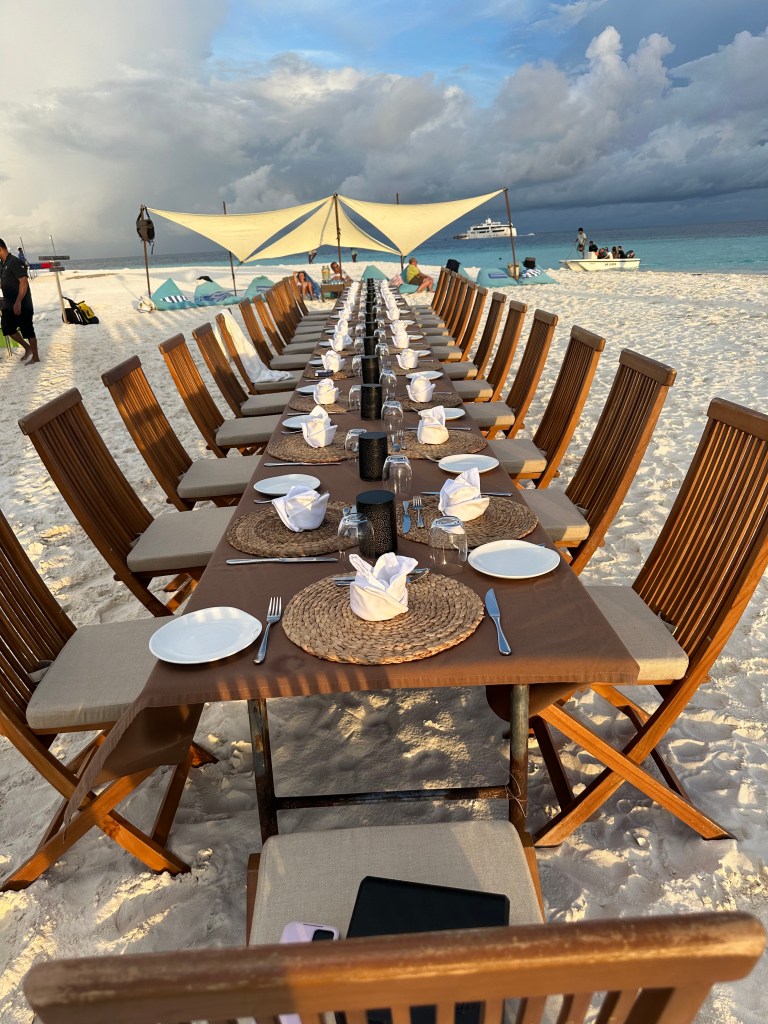
The Scubaspa fleet is by far the most luxurious liveaboard I have been on. Our cabin was beautiful, spacious and as the name suggests, the Scuba Spa fleet seamlessly integrates spa services into the liveaboard experience. The entire boat was elegant, stylish and offered a nice blend of areas for relaxation and indulgence! And because the Scubaspa boats have a separate 20 foot dive boat (called a dhoni) that travels along with the main vessel, there was even more room to include things like water sports on the lower deck during the down time on the boat (paddle boards, snorkeling, skiing, etc.)
What we love about the Maldives
What’s not to love? Now, it is kind of hard to pin point our favorite specific dive sites but there are a few dives that really stood out. Our trip was the first week in November and our itinerary included the Central Atolls. And while it was not the area with maybe the most exciting underwater wildlife, there is something really special about it and that being the atolls themselves.
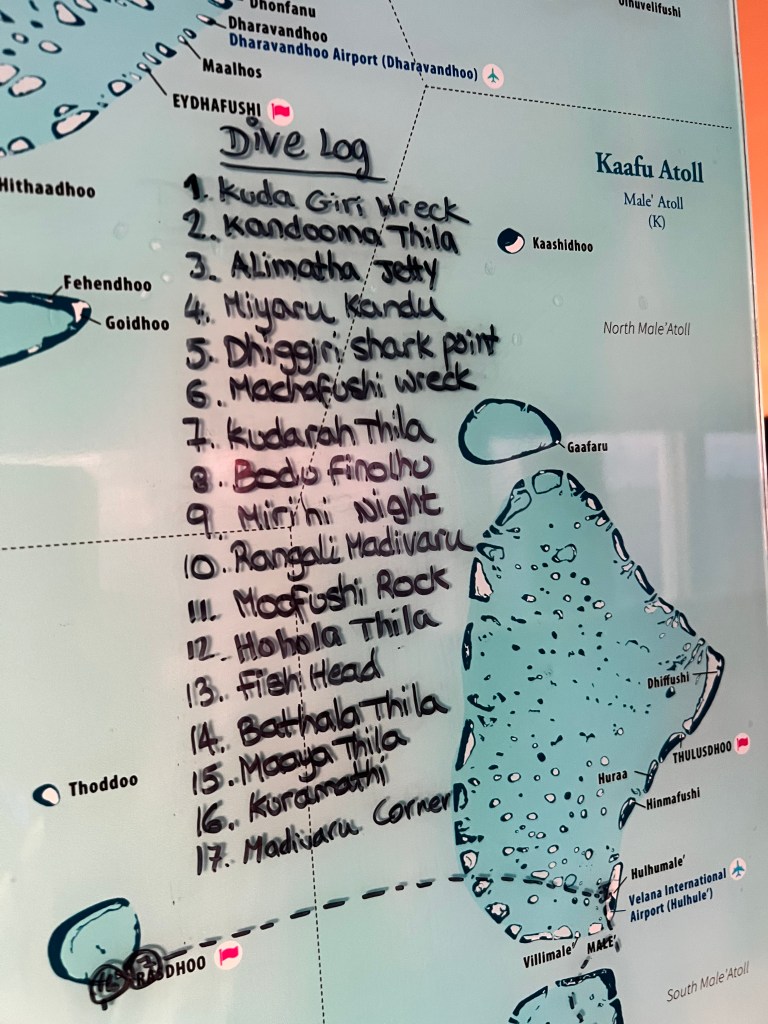
Why are these atolls so special you ask?
Atolls are basicallly natural rings that serve as protective barriers that help nurture an incredible array of colorful corals and fish. These circular coral formations create lagoons swarming with vibrant marine life. This is why you will find awesome atolls all over the world that are perfect for diving!
Now, don’t be fooled by these so-called protective barriers because what you will also find are plenty of channels surrounding these atolls. And where you have channels, you will find currents that can be great for diving. While currents are great from a divers perspective for drift dives, they are also nature’s conveyor belts, bringing in nutrients and turning these atolls into a buffet for aquatic life. These currents were the basis for some of our favorite dives! Once we entered the water we would catch the current, drift along until we found a nice seat at the “so-called” table and hook on for the show. We saw mantas, rays, plenty of sharks (white tip, silver tip and grey reef sharks), and plenty of schools of fish there for dinner time.
Another very memorable dive was when we went to visit the nurse sharks. This dive site is easily accessible and very popular for snorkels as well so it can be a little crowded at times. The good news is that on any given day there are plenty of nurse sharks that show up that you need not fear, just spending a few minutes will award you some up close and personal time with them.
Pete’s favorite dive was a midday dive that offered up a multitude of creatures normally holding out for the sun to go down. He saw a bunch octopi, and even saw cuttlefish laying eggs! And of course this was the dive that I opted to sit out. If you are a diver you know that any dive you sit out will be the dive you will miss out on all the cool stuff!
And who doesn’t love a night dive! As the sun sets, the underwater world transforms into a mysterious realm illuminated by your trusty dive light. Encountering nocturnal creatures is what it is all about. And while it was fun to see the underwater world come to life in darkness, what was not fun was the “bloodworms”. You mainly encounter these during entry and the safety stop and exit as they are attracted to the torches or lights you are carrying and on one of our night dives they were extremely bad. I was extremely glad I wore by hooded vest because I was having anxiety about those worms in my hair. So my hooded vest is going to be a staple for night dives going forward!
Speaking of nighttime, at the end of a long day of diving, there is nothing better than sitting on the back deck of the boat and in hopes of seeing curious creatures that might stop by to say hi!

The worst part about this trip is that we were not able to replace our GoPro that was flooded during our last liveaboard a few weeks ago and don’t have any underwater footage as keepsakes of our trip! But in retrospect, those dives that are free of the distractions of cameras and video equipment are sometimes the most enjoyable. But man, I would have LOVED to have gotten a shot of the biggest frog fish we have ever seen!
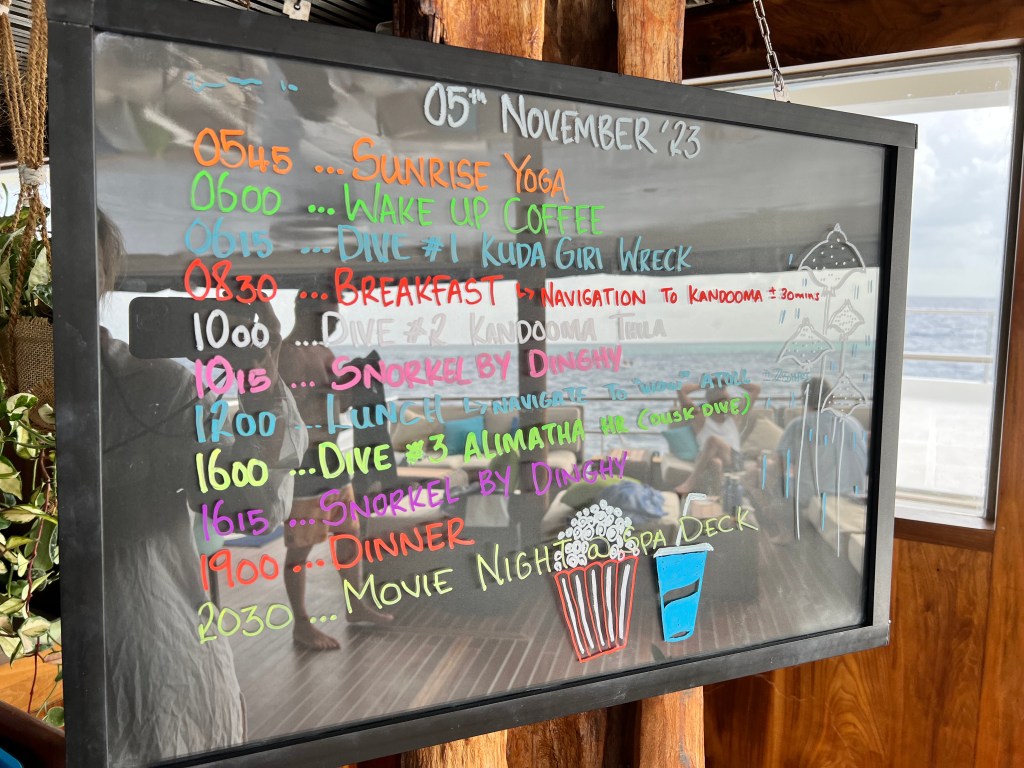
Each day on the boat presented another full filled itinerary! Here are a just a couple snapshots of what it is like to spend a day exploring the world from a liveaboard.

 The Modern Nomads
Leave a comment