
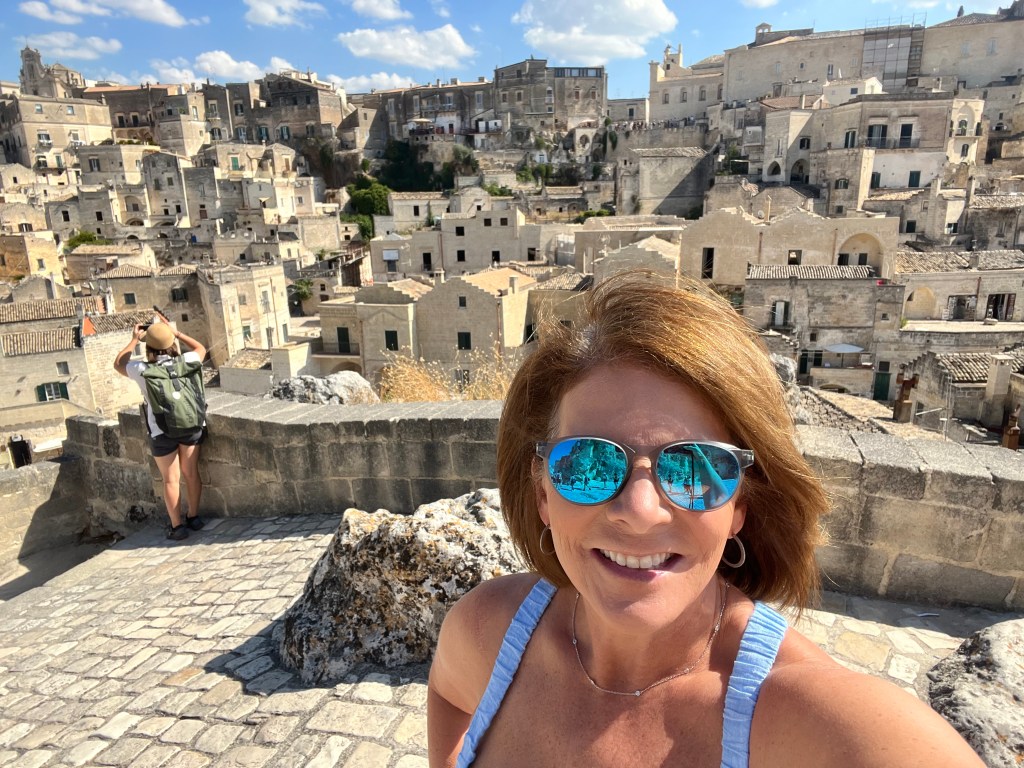
Matera, located in the Basilicata region of Italy, is one of the oldest, still inhabited cities in the world. In this city you will find that while Matera is the capital city of the region of Matera, the ancient part of the city is what draws tourists to the area. Carved into a ravine is where you will find the medieval churches, ancient frescoes, and a glimpse into what life was like over 9,000 years ago.

This probably will top our list of one of the most fascinating cities we have visited in the world. To understand the beauty of this place you honestly have to see it in person. Matera is so unique, it has been used as a backdrop for films such as Mel Gibson’s The Passion of the Christ (2004) and the more recent James Bond’s No Time to Die (2021).


“Sassi di Matera” is a complex of cave dwellings that were carved into the ancient river canyon that have documented evidence of human life dating back to 7000BCE. The highlight of any visit to Matera is of course the two Sassi (stone) districts, Sasso Caveoso and Sasso Barisano.


Matera’s Rags to Riches Story
These cave districts had always been the poorest part of Matera. The cave homes (dwellings) in these districts were without proper sewage system, electricity, or even running water up until the 1950’s. And even at that time there families were still living in these primitive cave dwellings. Matera was considered the shame of Italy at that time. But in the 1950s, the government began a project to move residents (by force) out of the caves into better community housing.
Today you can visit Matera and find a very different “Sassi” than what was here for thousands of years. The old Sassi neighborhoods have since been updated with modern conveniences like electricity and a proper sewage system. And while some families moved back into their original homes, many of these original stone dwellings have been transformed into boutique hotels, restaurants and shops.

We actually stayed in one of these cave hotels and it is amazing to see how they utilized the space they had. Most of these restored buildings don’t look like caves from the outside. While the entrances look like simple homes stacked on top of the other, the actual structures go deep into the rock and can have several levels to them. You can actually tour a few museums homes that are setup to show you what an original home was like, which we found really interesting!


Now that we have covered all the stone ancient stuff, I wanted to also mention a couple of other highlights from our visit.
One being the little shops that sell wooden bread stamps. Like many ancient cities, the community had many common areas that were shared and this included community ovens. Each family would bring their bread to be baked and used a stamp to mark their loaf to distinguish it from others. There are many shops that sell these bread stamps and you can customize one with your initials, etc. This was a great little keepsake or memento from our trip.

Nom Nom Nom
I wanted to mention the local culinary delights in Matera. While we were only in the area for a few of nights there are a couple things worth mentioning!
The first one to mention is pane di Matera. This is a local bread and it was fabulous! And while it seems to be such a simple thing – flour, water, yeast and salt – it is something really special and unlike any bread we have had elsewhere in Italy. This large loaf has a unique shape and intense flavor and and it is specific to Matera. It has a dark brown rigid crust and has a crumbly yellow center as it is made with a special semolina grain. And when we tried to get the recipe we realized that the only place you can make or try pane di Matera is in Matera!

Pane di Matera is an IGP-protected food product, meaning that it can only be made in the town of Matera, and must be made to the same way it has always been…. True Pane di Matera is made with a Lucanian-milled semolina grain known as ‘Senatore Cappelli’ – but also from the fermentation process. The bread is made with natural yeast taken from grapes and figs fermented in local spring water.
https://www.greatitalianchefs.com/features/matera-bread-basilicata#
The other thing we found delicious was the peperone crustose, or crispy pepper. This Lucanian delicacy is made from the Senise pepper (PGI). While this pepper may look similar to a spicy chili because of its bright red color, it is a sweet regional food that you will find hanging practically everywhere. It is used in many dishes, such as pasta, or even just as a snack.

 The Modern Nomads
Leave a comment