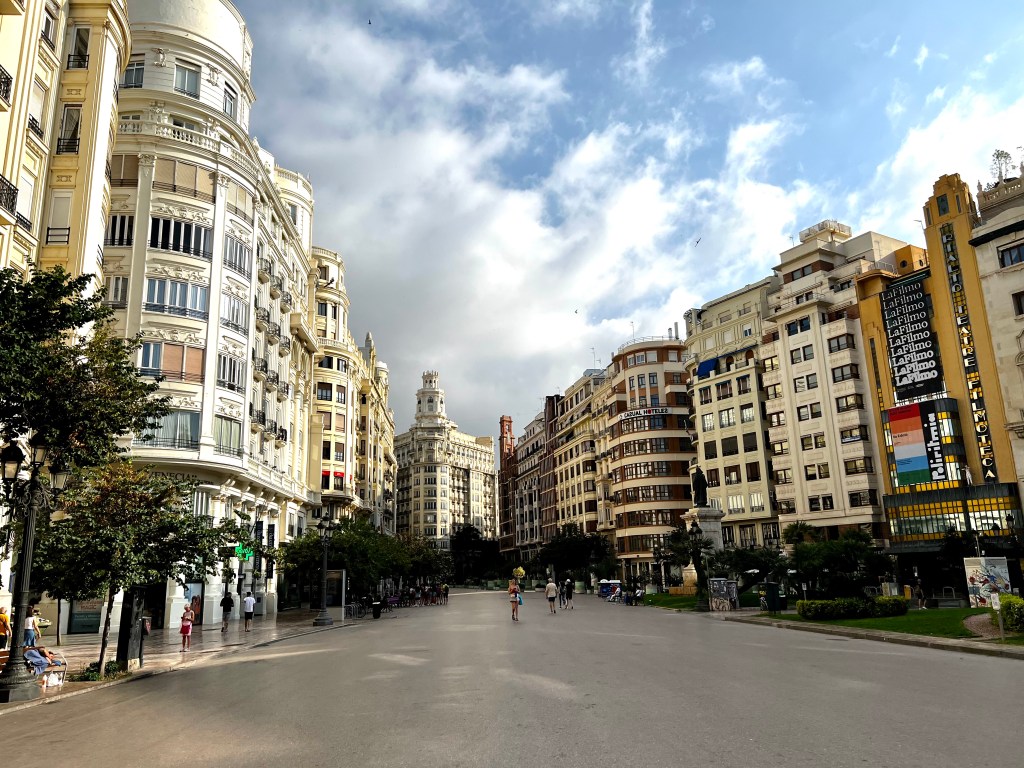
What a great city ! We weren’t sure what to expect but the first thing we noticed was that it was significantly cooler than the last few cities we have been to recently in Spain. Valencia is closer to the coast so that helps with the nice breeze even on a hot day!
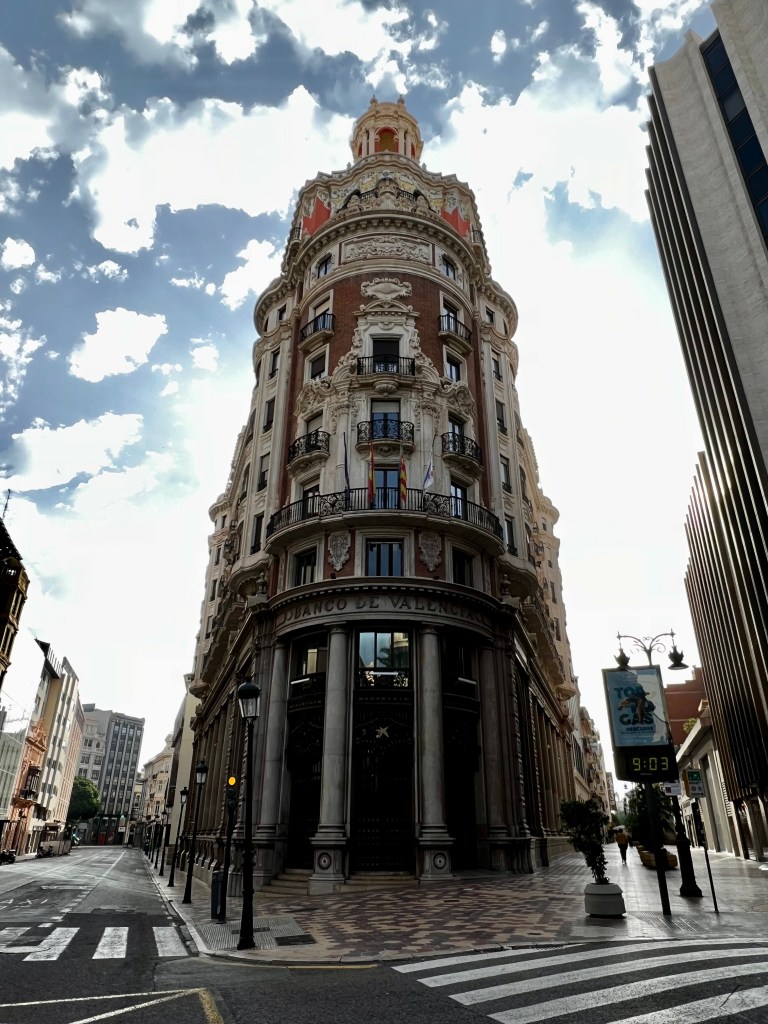
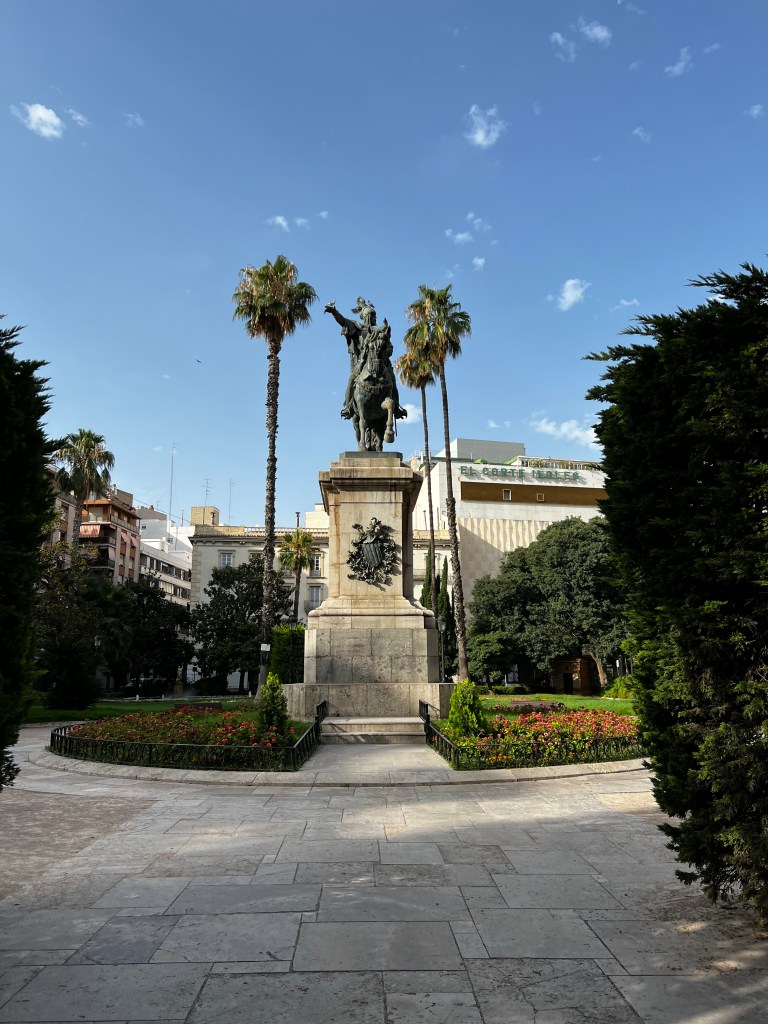
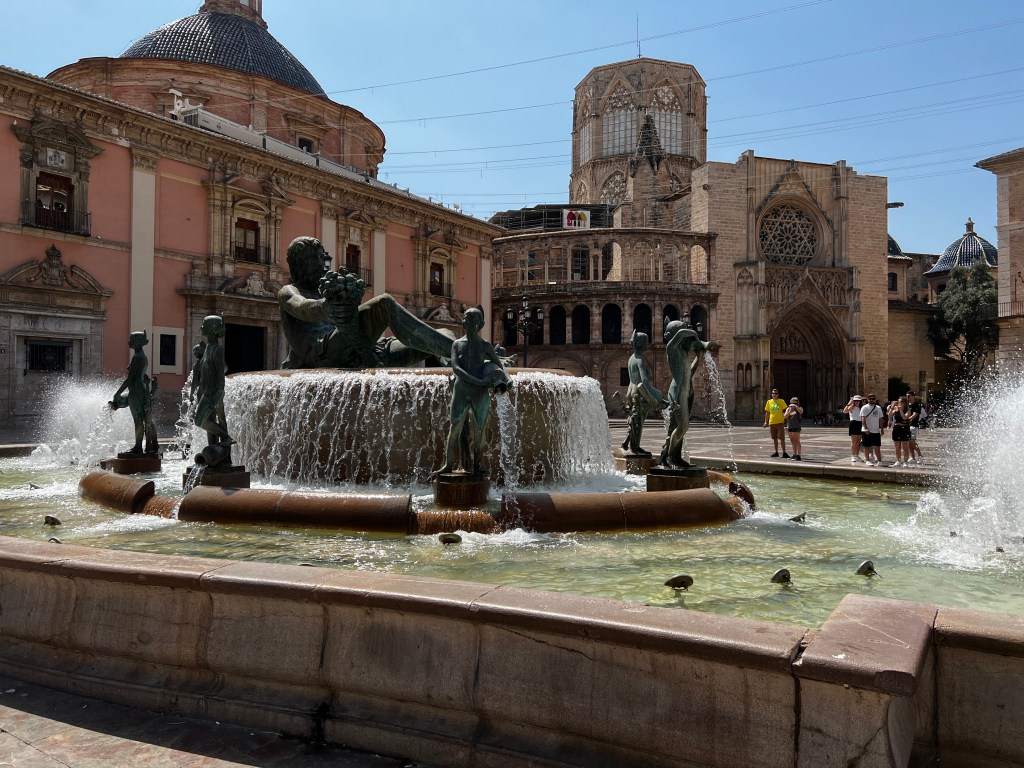
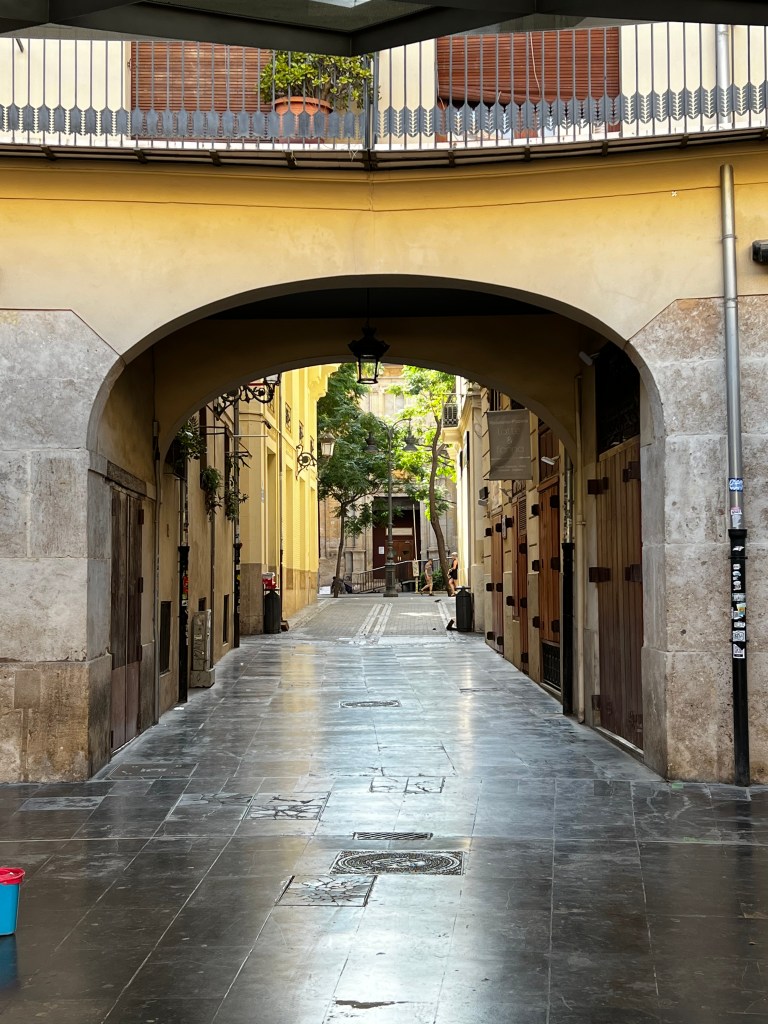
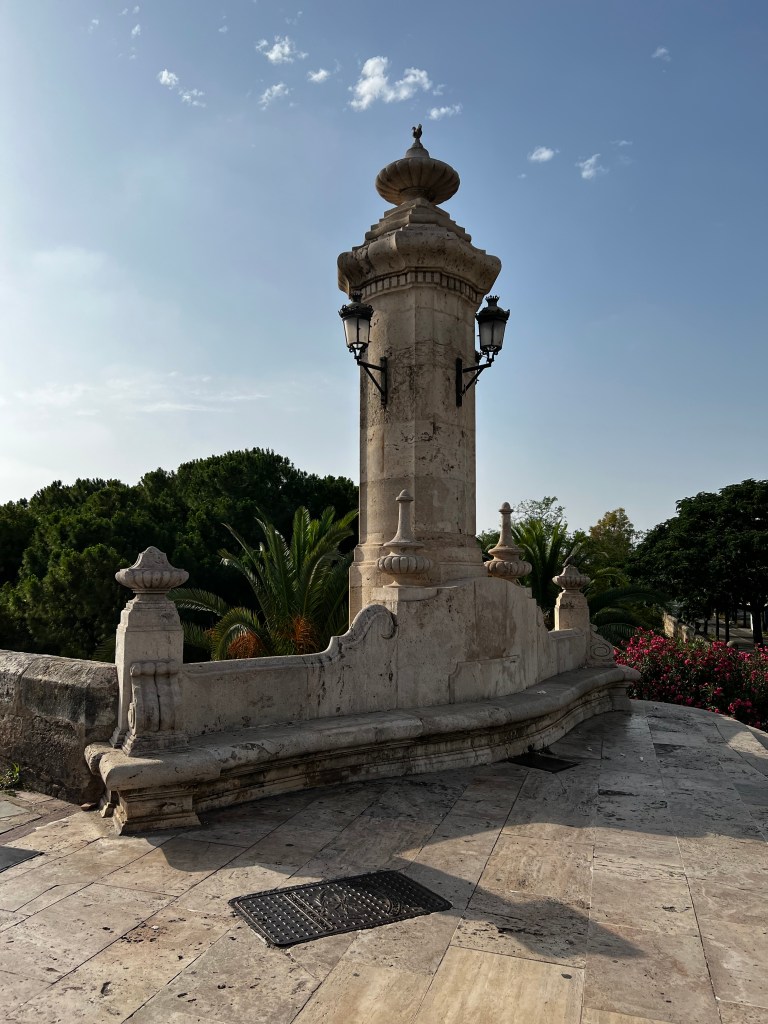
Valencia is famous for the City of Arts and Sciences, the Valencia Cathedral, the Old Town, the Central Market, and being the birthplace of paella. And we did our best to hit all of those highlights during our visit!
Getting there and where we stayed
We had about a 3 1/2 hour drive from Madrid to Valencia but we didn’t mind because the drive was really beautiful. Valencia is located on Spain’s east coast. And while it is the third largest city in Spain we felt it was far less crowded and congested as compared to Madrid.
We stayed at the Vincci Lys Hotel which was situated in the center of Valencia on a pedestrian street close to Valencia Town Hall.
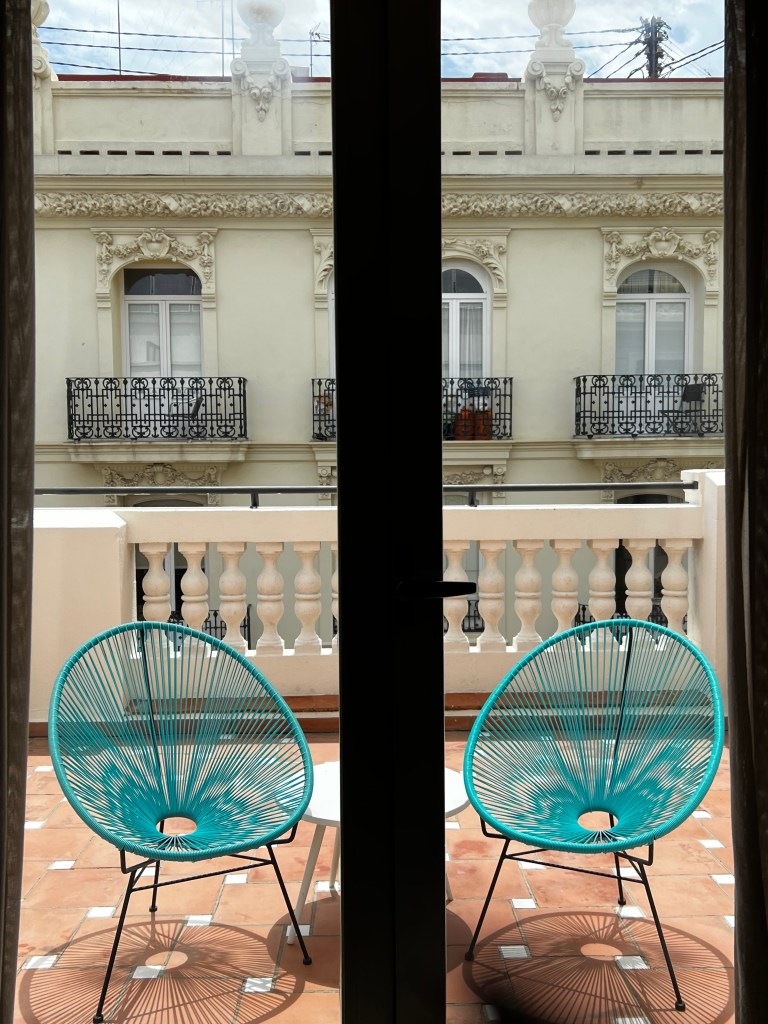
We had 3 nights in Valencia and while one of the highlights of this site is the 12 miles plus of long, sandy beaches, we didn’t actually have time to devote to a beach day. So we will save that for the next time we visit, and yes, we will definitely be coming back to visit!
Day one in Valencia, Spain
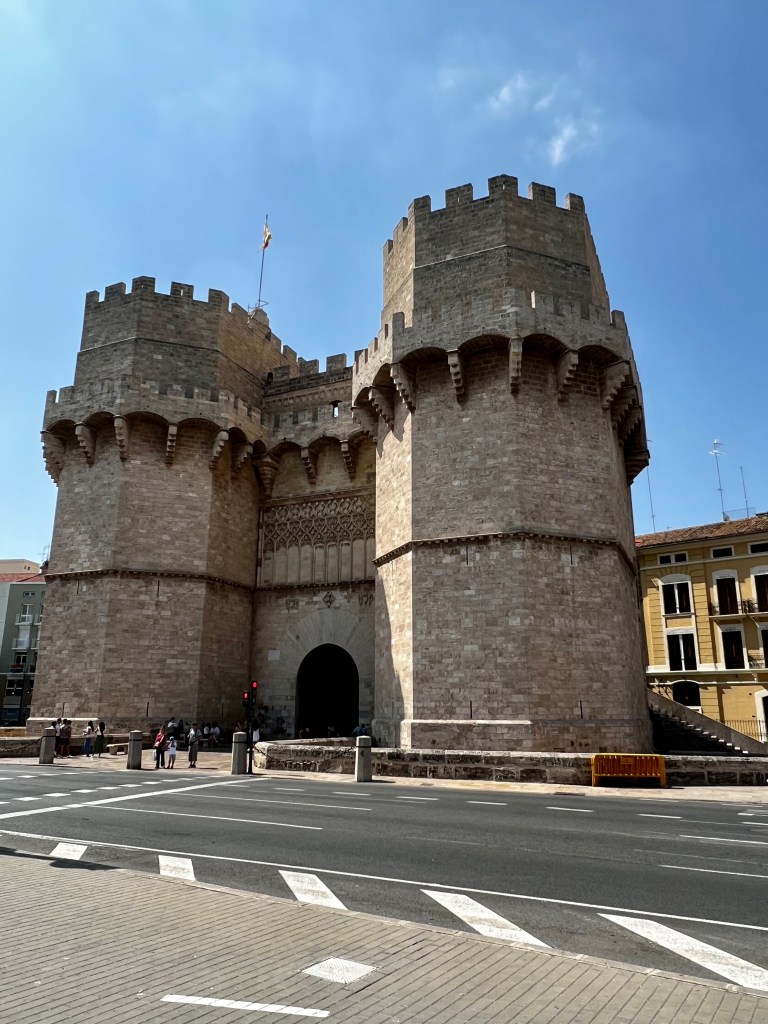
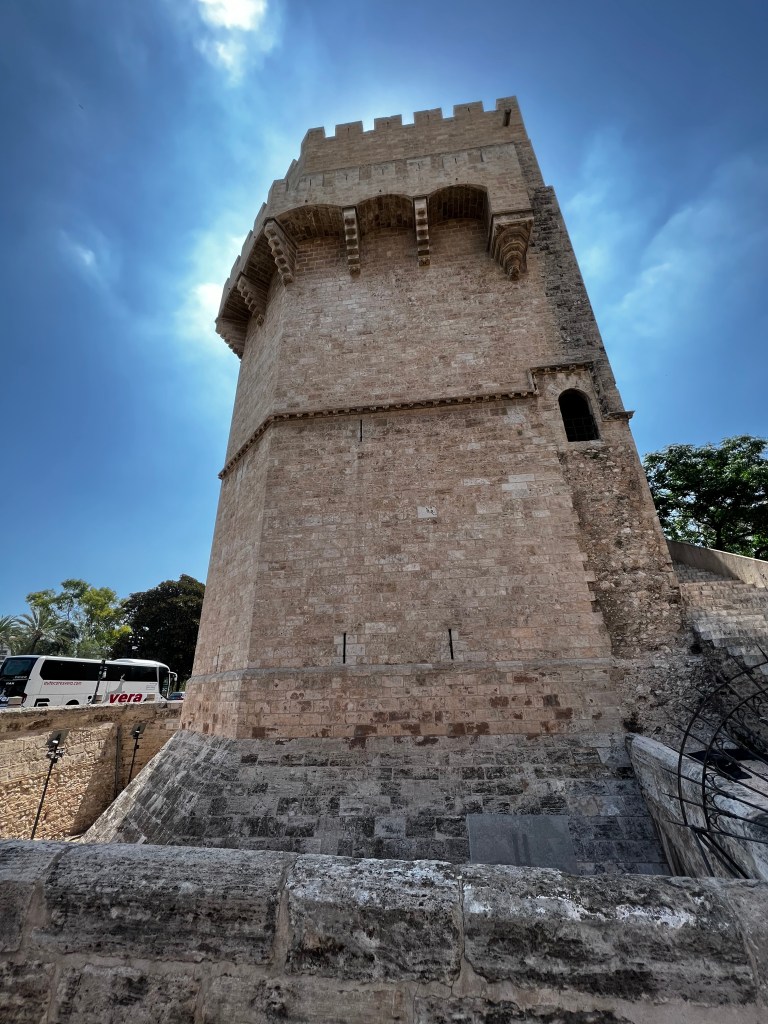
On our first day we had a private guide who met us at our hotel and we headed out to explore Valencia Old Town. On our tour we saw the Valencia Cathedral which is one of the main landmarks of the city and dates back to the 13th century. But one of my favorite parts of this day was the visit to Valencia’s Ancient City Gates. Over a thousand years ago stood twelve gates that secured the walls of Valencia and while the city walls are no longer there, there are 2 sets of gates that still remain. The Serranos Towers (Torres de Serranos) is one of them, and for centuries was the main gate to the walled medieval city of Valencia. These impressive towers are an excellent example of fourteenth-century military architecture. The second photo below is a side view where you can see on the right hand side where the wall once connected to the tower.
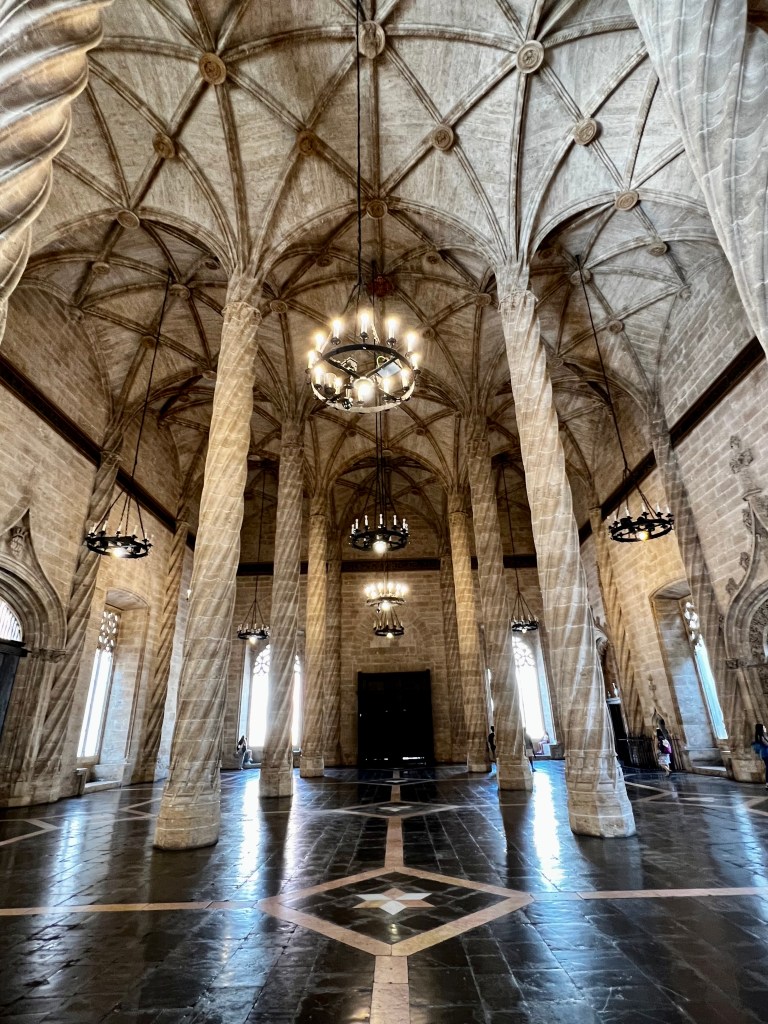
The next stop was to see the UNESCO World Heritage Site, Lonja de Seda (the Silk Exchange). Located in the middle of Old Town near the Central Market, this group of buildings was a center for commerce. Built between 1482 and 1533 for the primary purpose of trading of silk. There was a lot that went on here back in the day. They had a room where they held court (or something similar) and even had their own jail cells in one of the towers. Guess the silk trade was some serious business back then! This is a magnificent example of late Gothic architecture and really illustrates the power and wealth of a major Mediterranean mercantile city in the 15th and 16th centuries.
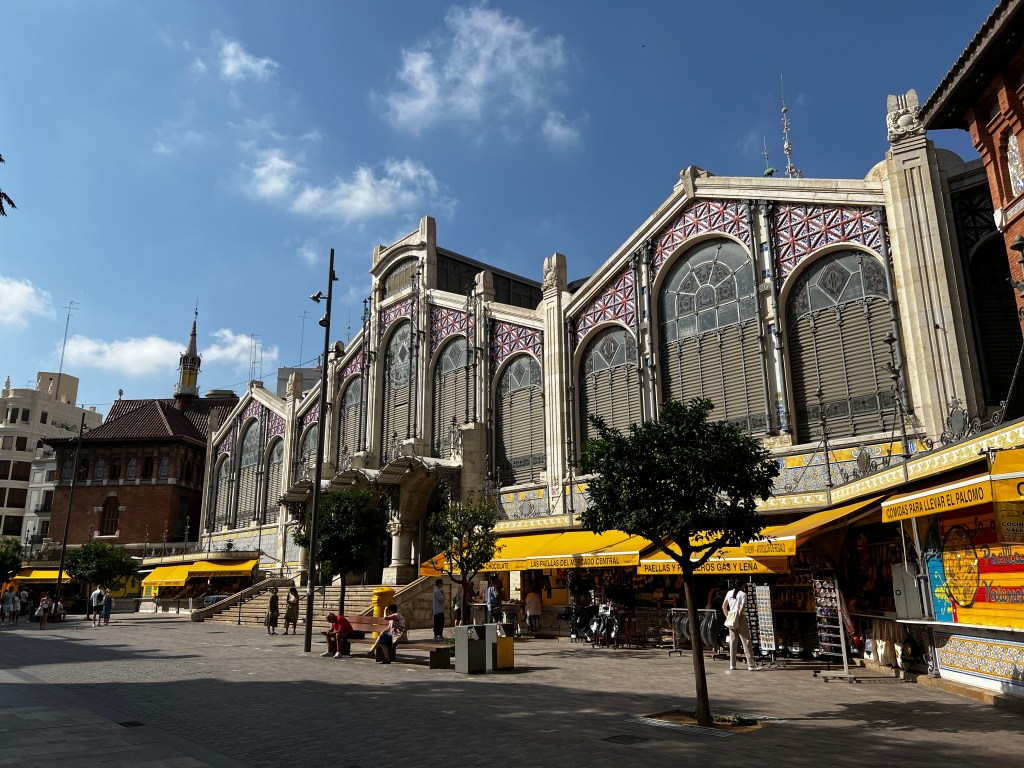
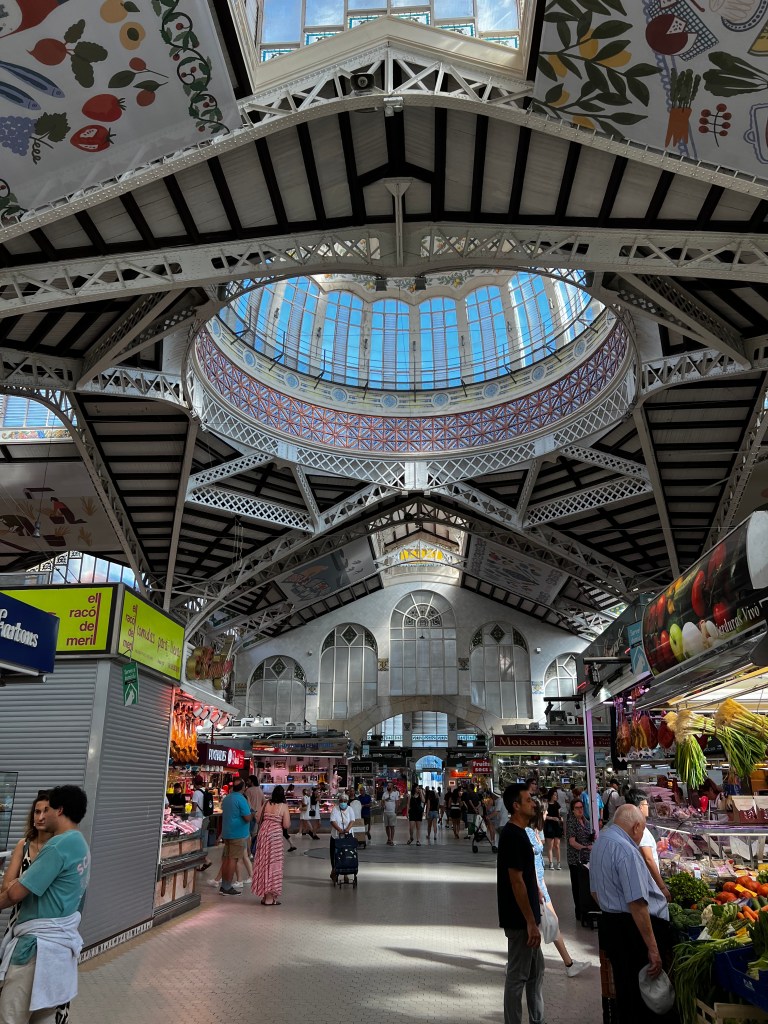
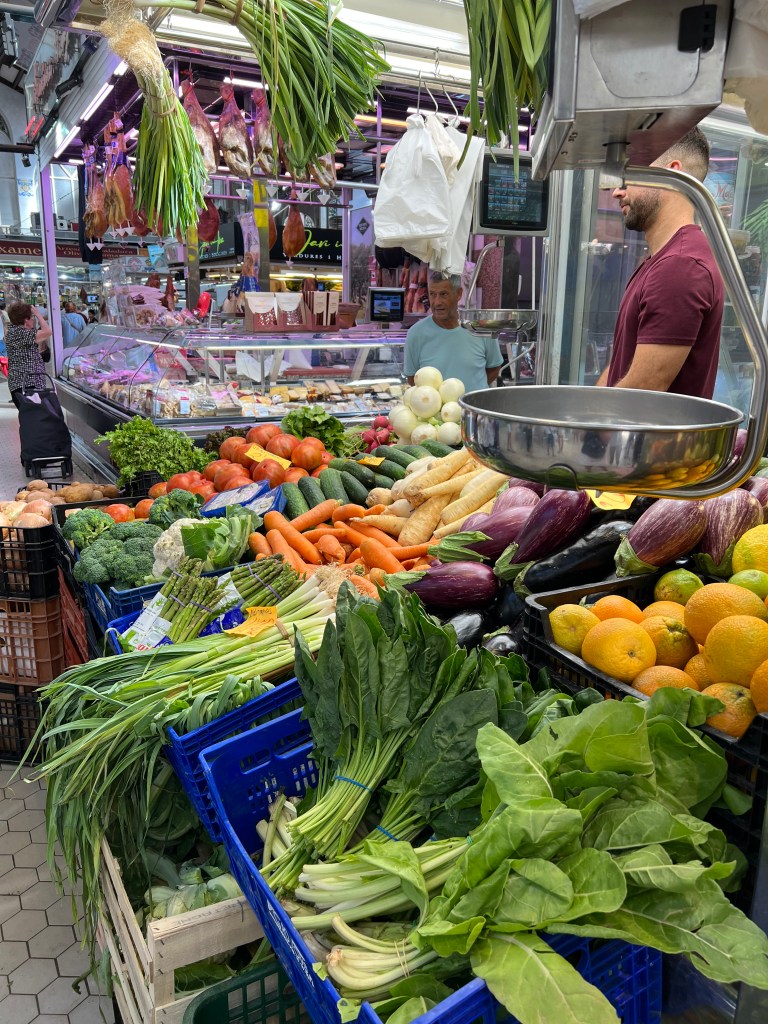
One of our favorite parts of just about every city in Spain is visiting the local markets. There is one designated to every neighborhood and then bigger cities will also have a central market. This is where all the local shop on a daily basis for their food. The one in Valencia was beautiful!
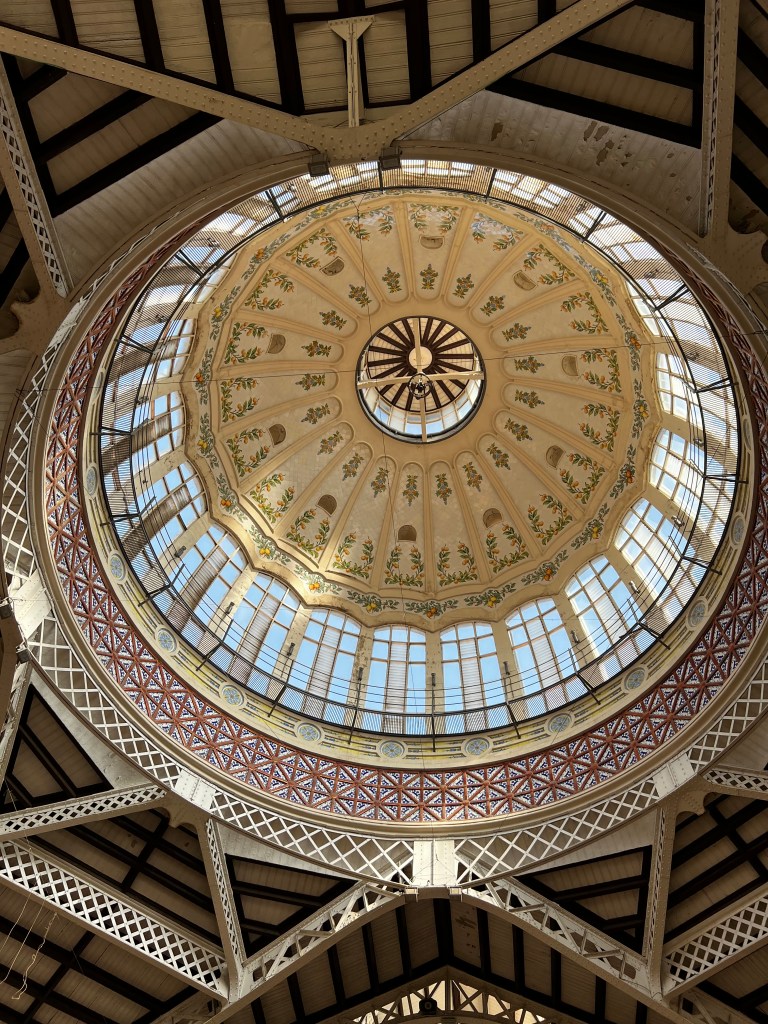
The Mercado Central or Central Market of Valencia is one of the oldest markets still in use in Europe and has been declared a ”Heritage of Cultural Interest” site by the Spanish Ministry of Culture. One thing we learned from our guide was that in the center of the market under the beautiful domed ceiling is a large circular section on the ground that is actually platform that lowers with access underground to allow the merchants to move their goods in and out of the market.
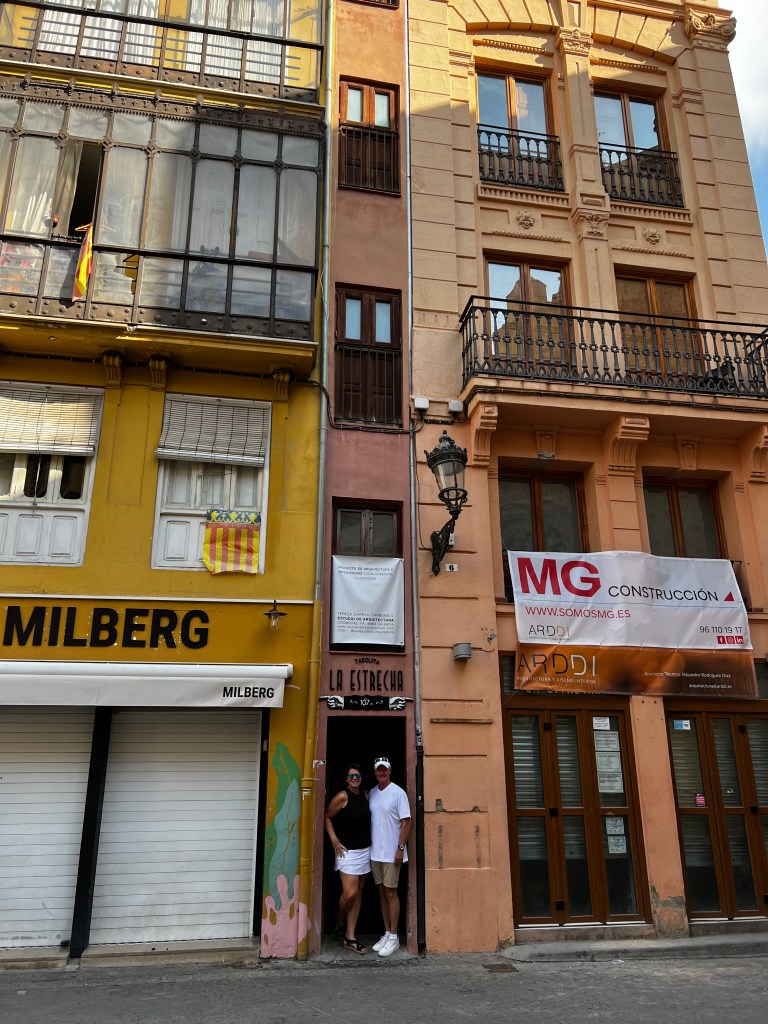
We finished the day by visiting some of the older neighborhoods of Valencia to see the architecture and learn a little about what life was like when the Old Town was thriving. Property was taxed based on the amount of real estate that faced the street so most buildings had a very narrow design. Both retail as well as residential buildings were built in this way. Check out this apartment entrance that is only 102 centimeters wide!
“La Estrecha” is one of the narrowest houses in Spain. The original house was five stories with only one room per floor with a family jewelry store on the bottom floor. Many of these old buildings are protected so that any restoration or renovation to property must preserve the original facade and some of the original architectural features. And that is the case with this property. Today, the interior is said to be connected to the adjoining property but you wouldn’t know that from the exterior!
Day two in Valencia, Spain
Since arriving to Spain we have had our heathy dose of historic and ancient sites and we were ready for something a little different. So on day two we headed out to walk to the City of Arts and Science (CAC). This was actually one of my favorite parts of the city. The CAC complex covers nearly two kilometers of the former riverbed of the River Turia and is included on the list of the “12 treasures of Spain”.
This complex is massive and very impressive and was designed by architect Santiago Calatrava. If you have visited the World Trade Center Transportation Hub in Manhattan you may see some similarities in design as it was designed by the same architect. There are many parts of this complex including:
- The Hemisféric – this eye-shaped building houses a planetarium, and an IMAX theater
- The Science Museum – includes interactive and hands-on exploration of science and technology with 26,000 square meters of exhibits
- The Oceanogràfic – home to one of the largest aquariums in Europe
- The Palau de les Arts Renia Sofia – this performing arts venue hosts the opera, ballet and other cultural events
- The Umbracle – beautiful open-air garden
The buildings are all so unique and beautiful. And the area surrounding this complex is in the new part of the city with modern apartment buildings. My favorite part of this area is that it is just off the beach and is connected to miles of city park that has been developed where the River Turia once was.
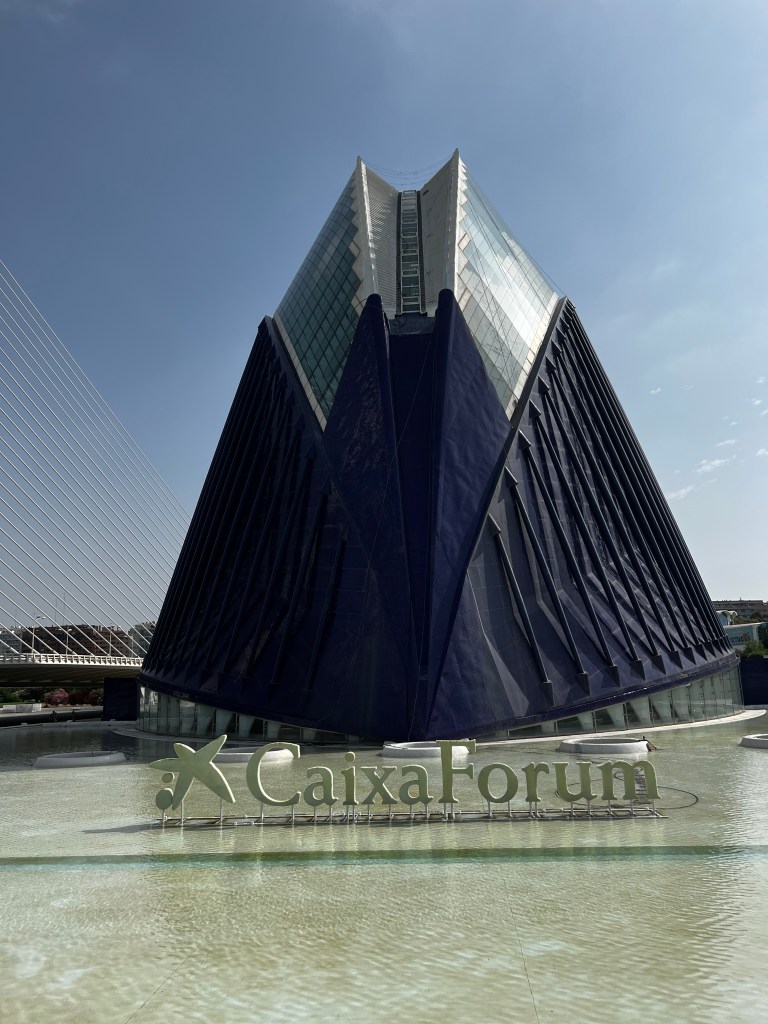
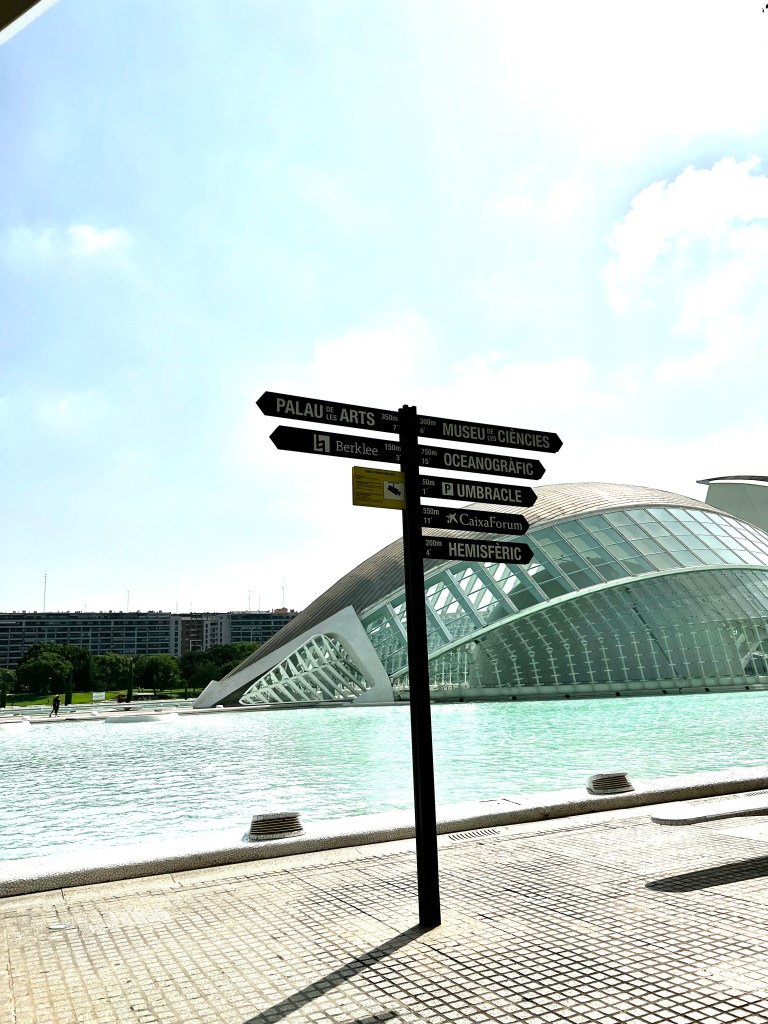
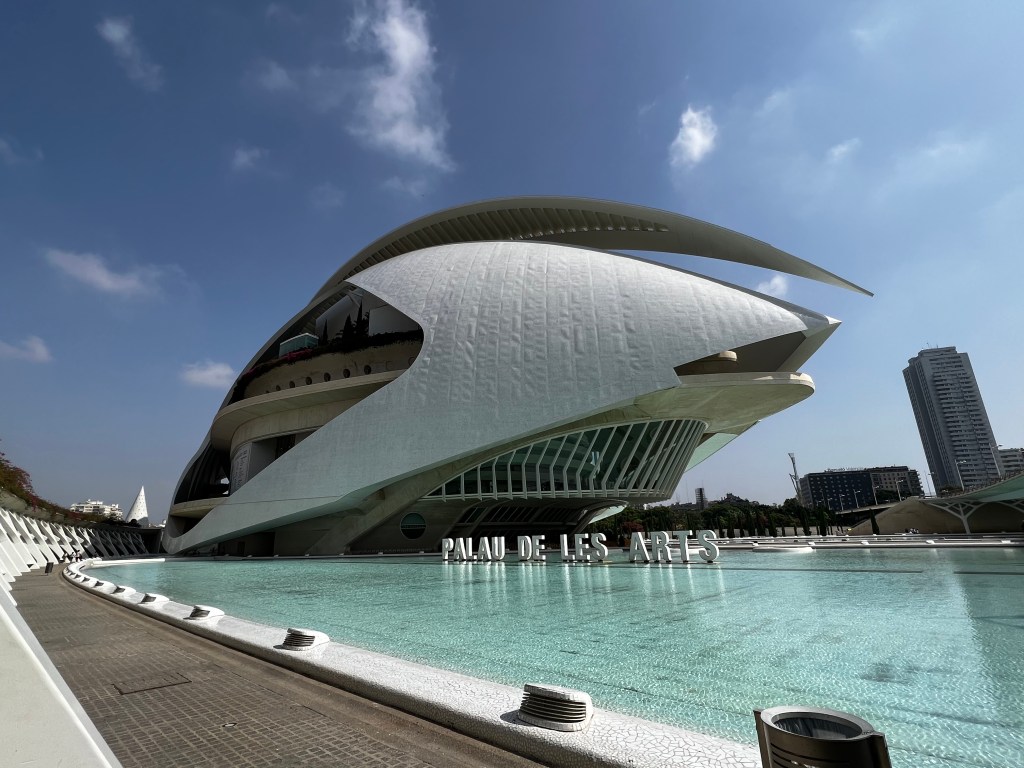
And I almost forgot to mention that among the already cool things going on in this complex, you will also find the Valencia Campus of Berklee School of Music!
The River Turia
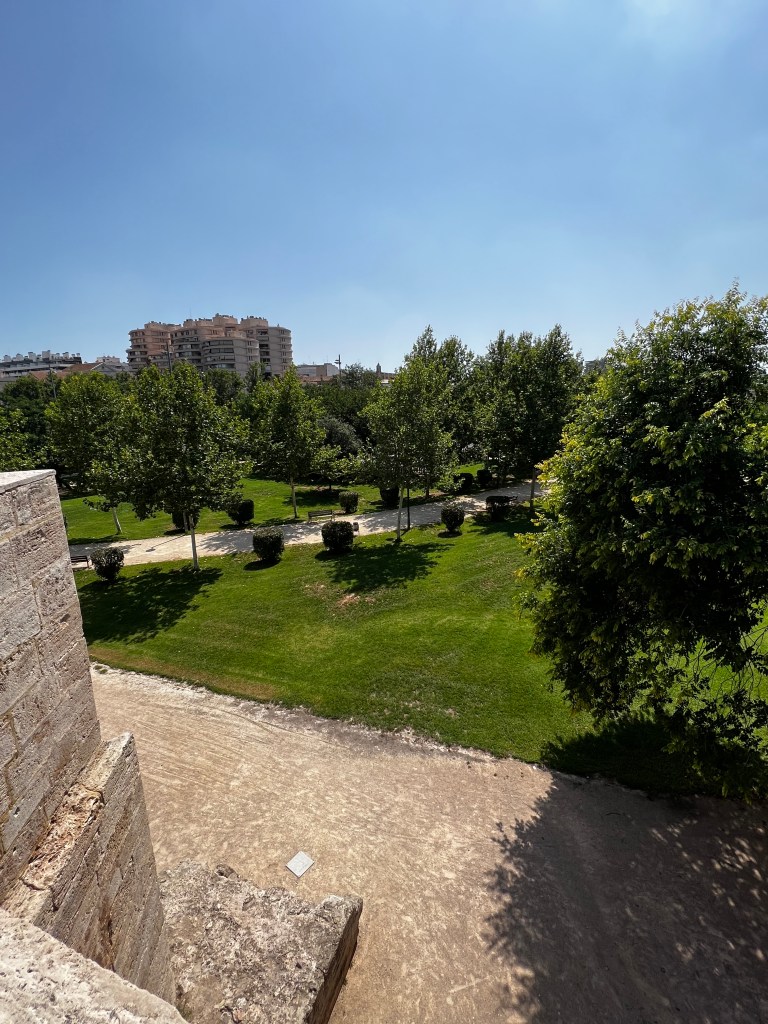
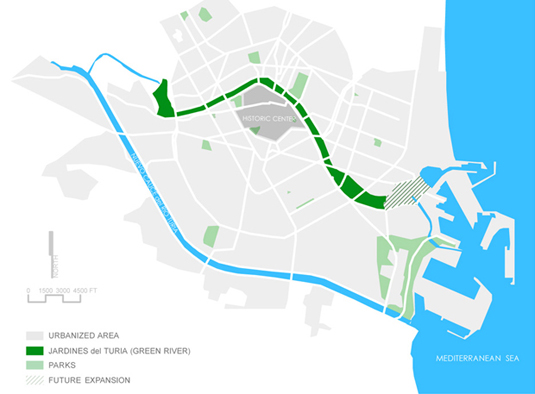
If you go to Valencia you will hear people reference the river and there are even bridges that are used to cross the river. The interesting thing is that there is no longer a river there. After a devastating flood in 1957, the city designed a plan to relocate or divert the river south of the city. This plan, known as “Plan Sur”, would not only protect the city from flooding but in the end would be home to the beautiful city park where you can bike, hike, and walk. This is also where the City of Arts and Science would eventually be located.
Valencia Paella
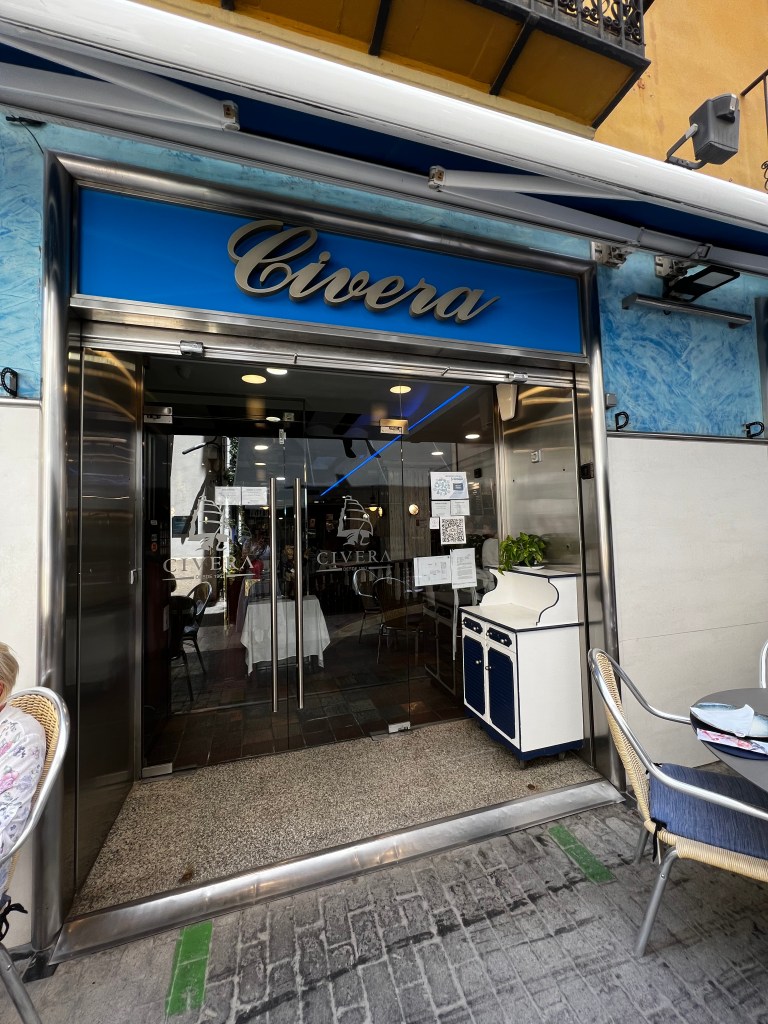
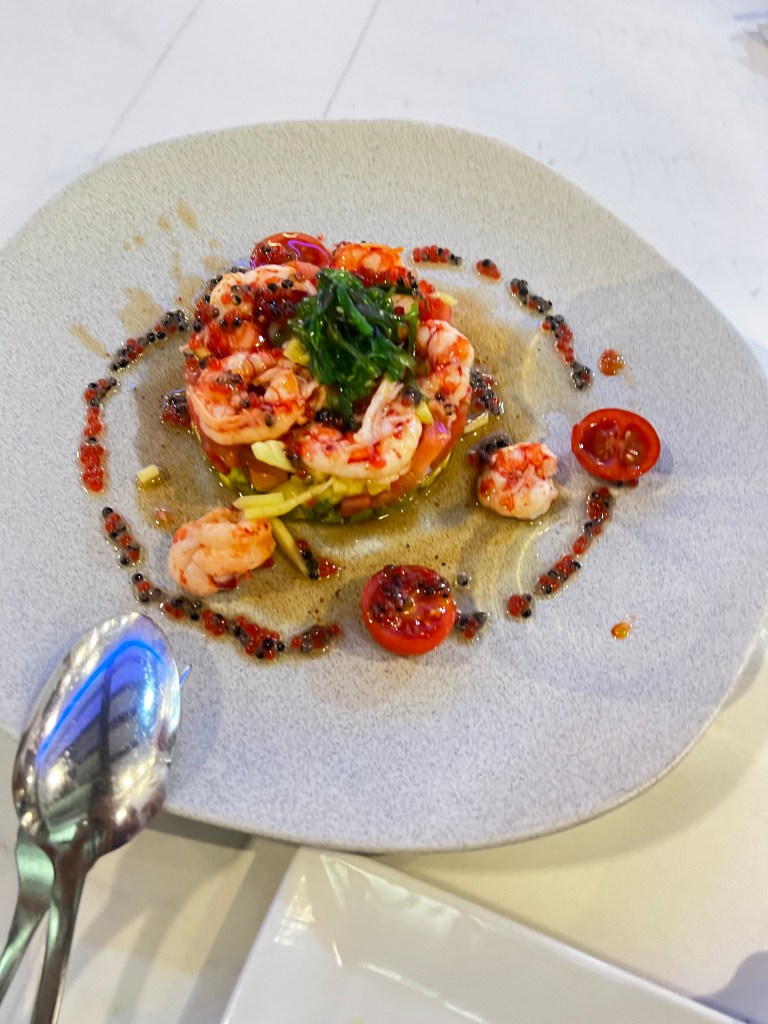
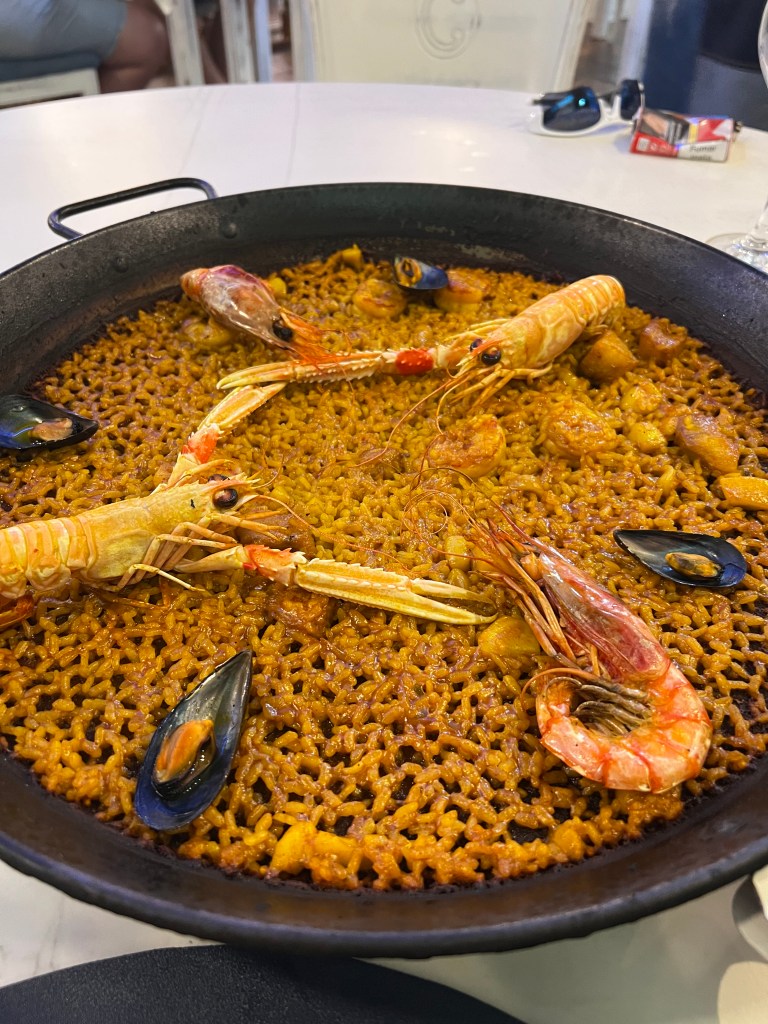
We have made paella on several occasions and were really excited to try the Paella in Valencia since it is considered the birthplace of paella. After some research we learned that the “original paella” is a Valencian classic that traditionally consists of rice that is cooked alongside chicken thighs, rabbit, three types of beans, tomatoes, and snails (yes…rabbit and snails…). Paella was considered a peasants meal back in the day and therefore the ingredients were inexpensive. After consultation on this fact with our guide, we now understand that while that is a type of paella from Valencia, it is not the main paella they are known for and that we should not leave without finding a good restaurant serving the traditional seafood paella! So we took his advice and he made us a reservation at Civera. They were booked but he was able to get us an early table right when they opening and it was fabulous. If and when we return to Valencia, we will put Civera on our list to revisit!
What in the Horchata is that?
One thing new we tried while in Valencia was Horchata. And at first I was a little hesitant because it didn’t look very appealing. It is a very cloudy watery looking drink but our guide assured us it was delicious. And after we stopped at a vendor to give it a try I can say we are definitely a fan!
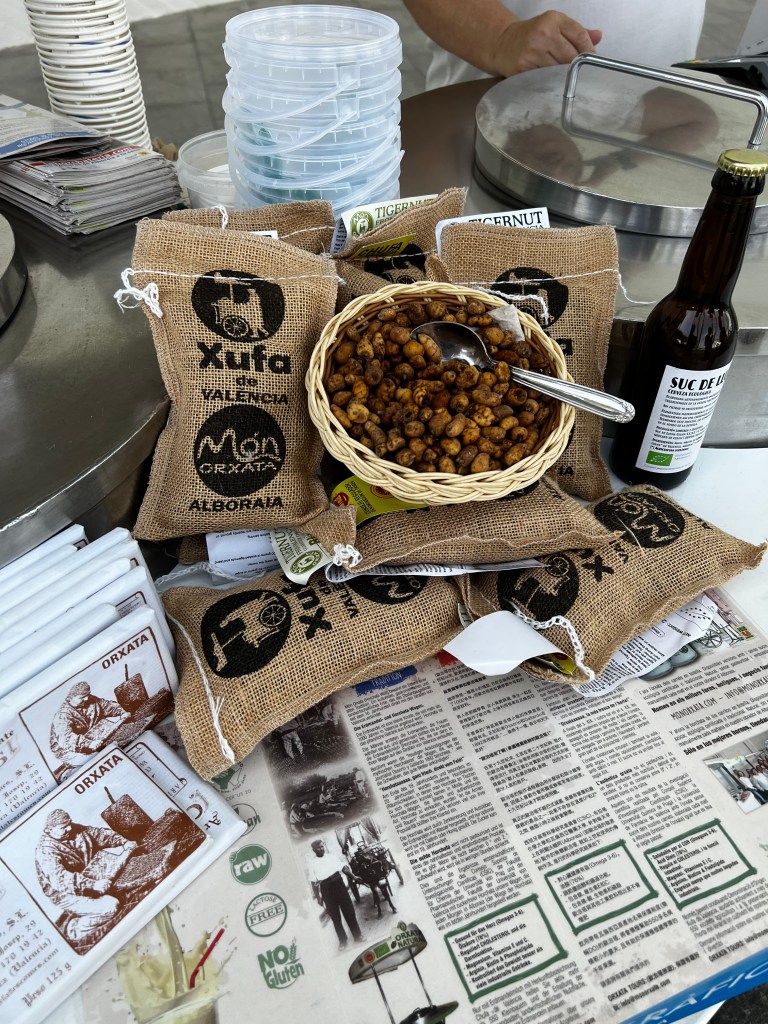
What exactly is it you ask?
https://barcelonayellow.com
Horchata in Spanish. Orxata in Catalan. Orxata de chufes is a sweet drink usually made of ground tigernuts called chufas blended with water and sugar. Horchata tastes very sweet and sometimes has a slightly bitter aftertaste but it is refreshing and very healthy being high in minerals and vitamins and low in fat.
 The Modern Nomads
Leave a comment